

Product Introduction
High-Adhesion Phenolic Resin Series: Pursuing Adhesion to Various Materials
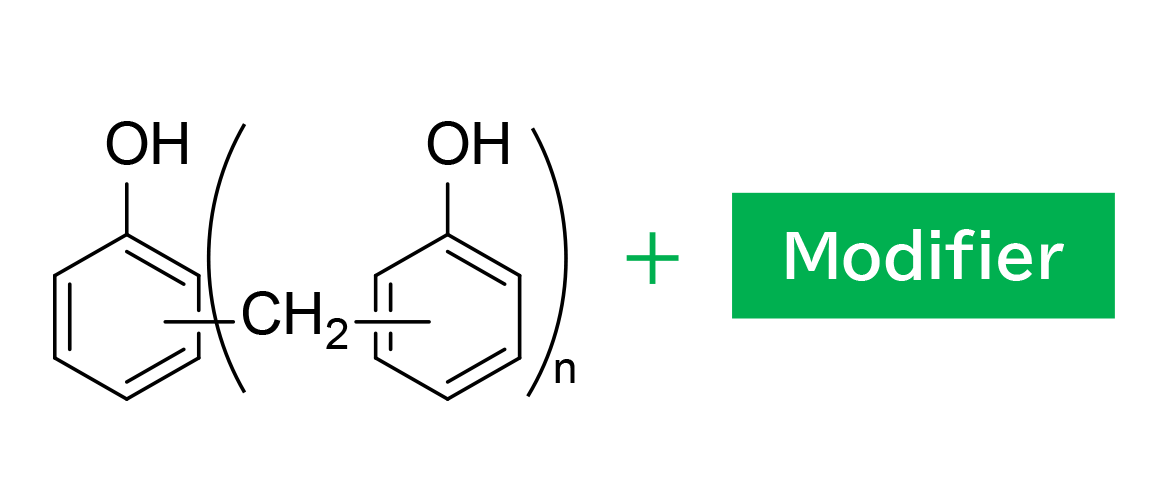
Modified phenolic resins designed for high adhesion to various materials, including metals and carbon.
They combine excellent adhesive strength and heat resistance to achieve high reliability. This page
introduces grades specialized for specific materials and applications.
Click the image below to see details for each grade.
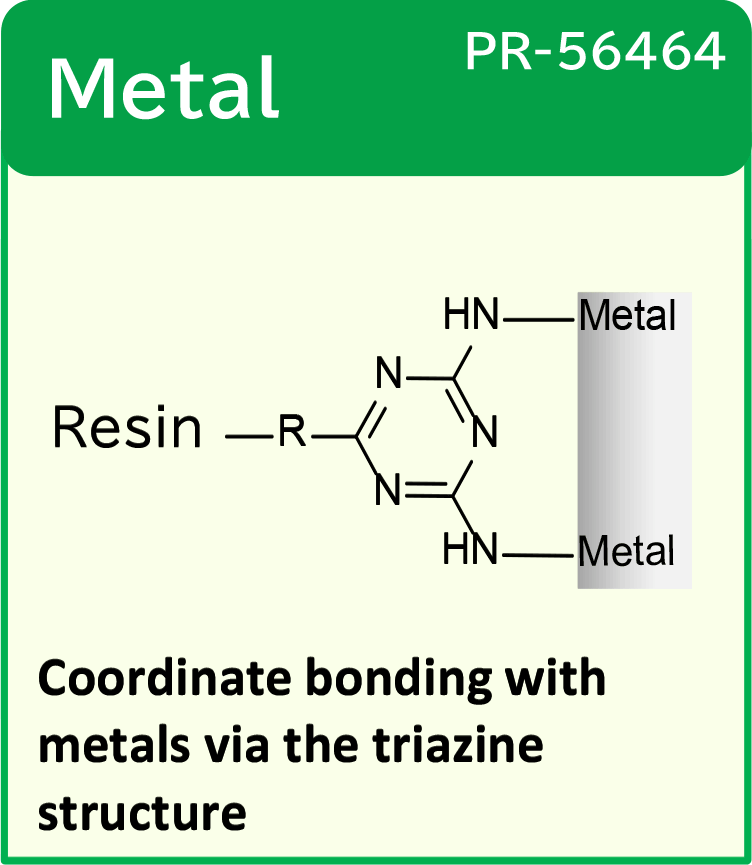
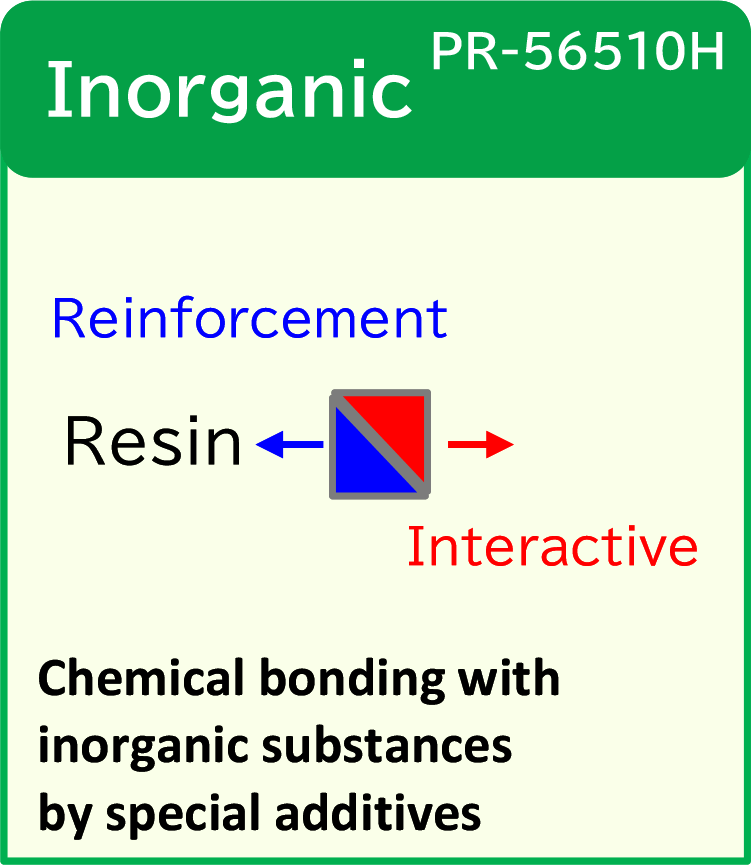
Metal High-Adhesion Phenolic Resin PR-56464
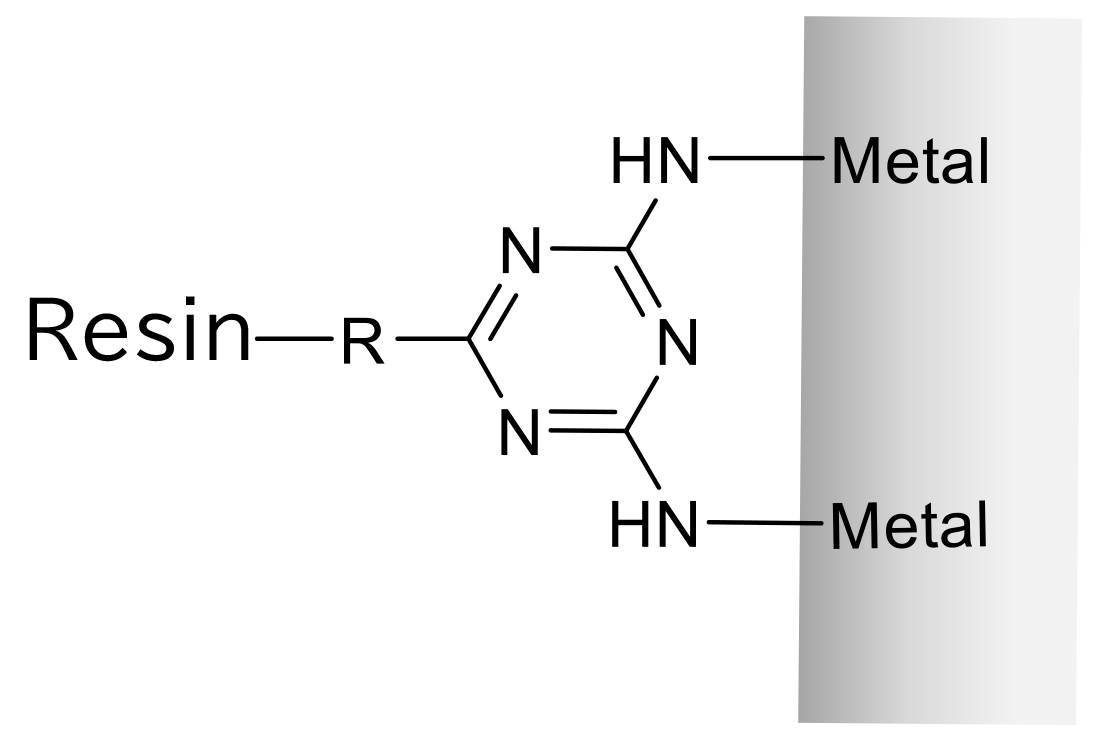
Adhesion Mechanism
The triazine structure forms coordination bonds with metal surfaces. This is expected to enhance adhesion strength and reliability in metal composite components.
Resin Properties
| Item | PR-56464 |
|---|---|
| Type | Novolak |
| Shape | Solid |
| Softing point (℃) | 95 |
| Free phenol(%) | <0.1 |
| adhesive agent content(%) | 20 |
Cu Adhesion Evaluation: Phenolic Resin Molding Compound

Curing conditions: Transfer, Mold temperature 175℃, Injection pressure 10 MPa, Curing time 120 sec
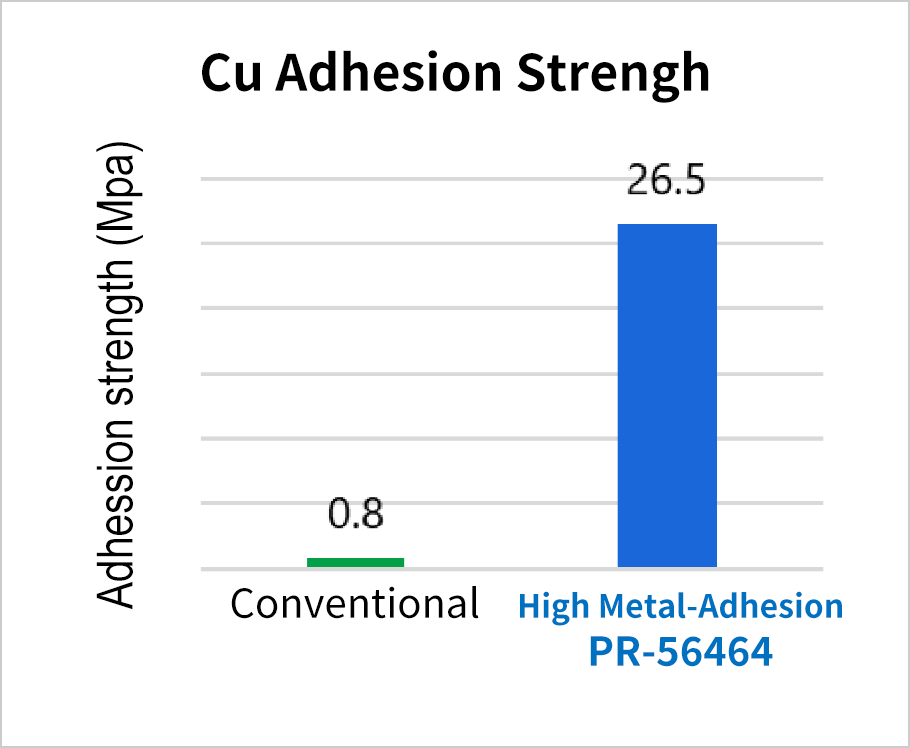
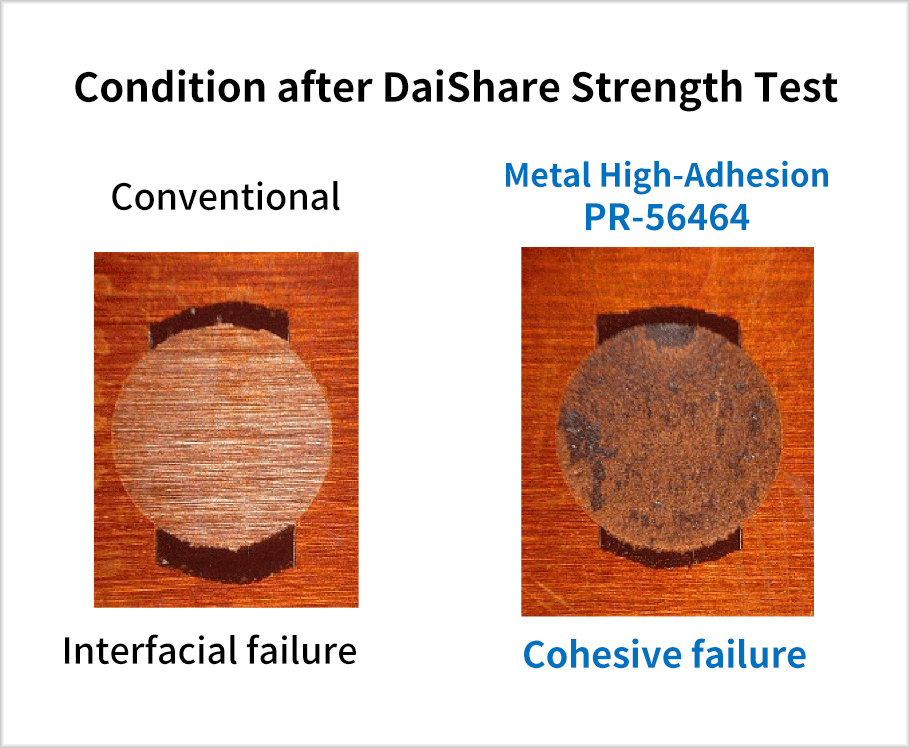
The addition of High Metal Adhesion PR-56464 improves adhesion to copper substrates.
Recommended Usage
- Compound by mixing with fillers.
- Depending on the application, mold at 150℃ for several minutes, then cure at 180-230℃.
High-Adhesion Phenolic Resin for Inorganic Materials PR-56510H
Adhesion Mechanism
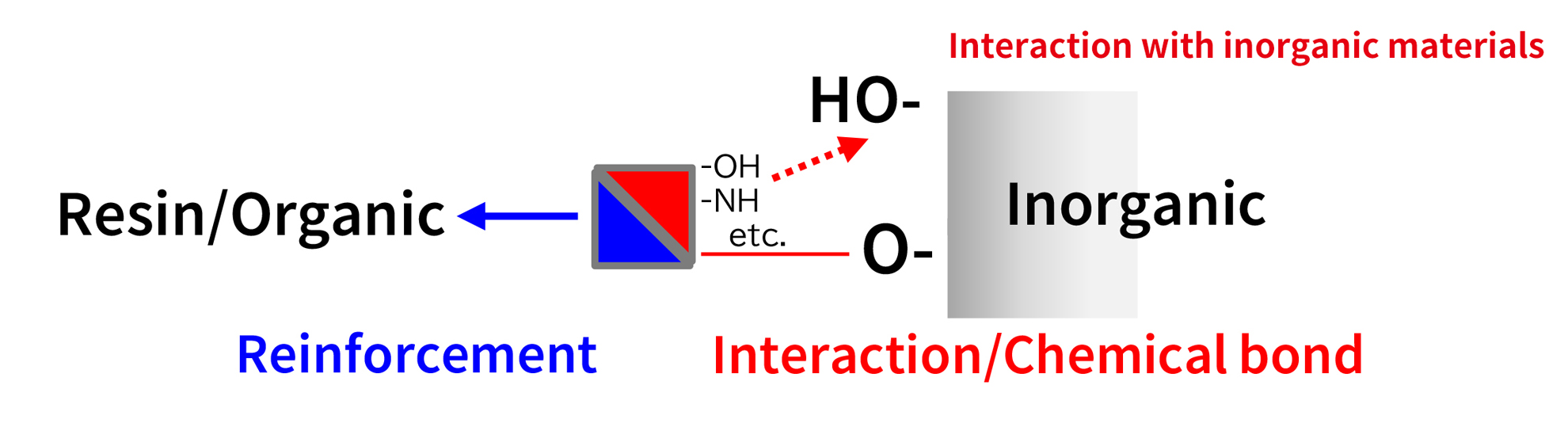
Improved heat resistance/moldability of the resin itself & Enhanced adhesion to inorganic materials are both expected to contribute to improved adhesion.
Resin Properties
| Item | PR-56510H |
|---|---|
| Type・Shape | Novolak・Powder |
| Flow(mm/125℃) | 31 |
| Gel time(sec/150℃) | 63 |
| Free phenol(%) | <1.0 |
Composite Material Properties
Flexural Strength
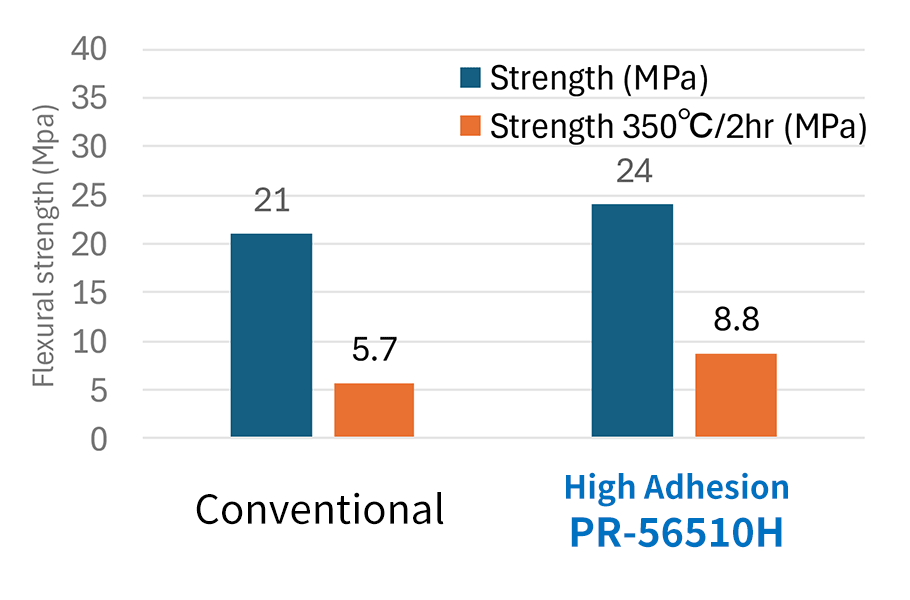
Mixing conditions: 8% phenolic resin, 2% fiber, and
90% various fillers
Molding conditions: 150℃ × 4 minutes
Curing conditions: 200℃ × 3 hours
Both room-temperature strength and post-heat-treatment strength are improved, and enhanced wear resistance of the molded parts can be expected.
Recommended Usage
- Compound by mixing with fillers.
- Depending on the application, mold at 150℃ for several minutes, then cure at 180-230℃.
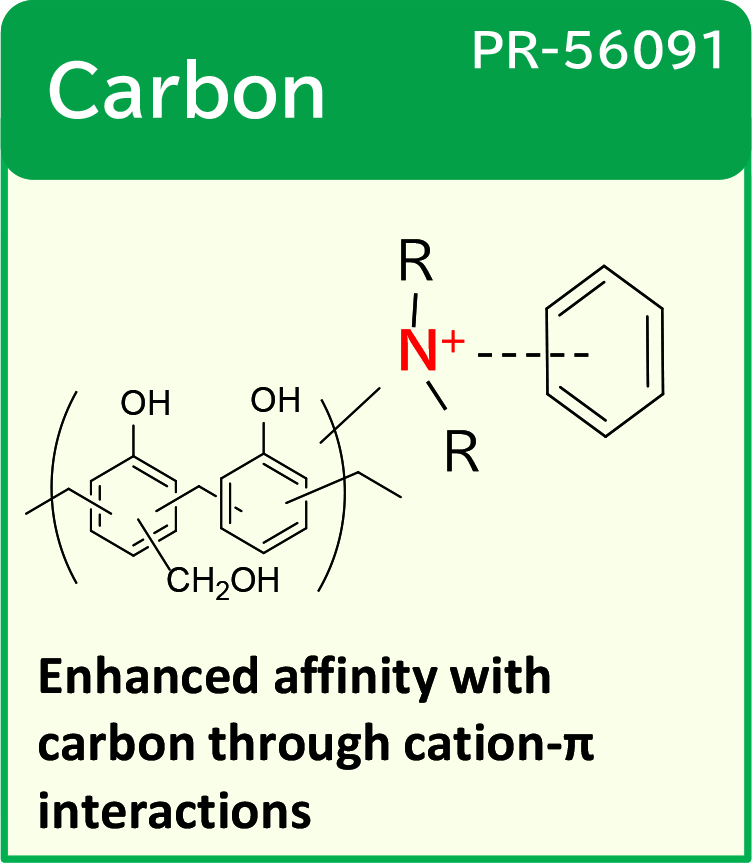
Carbon High-Adhesion Phenolic Resin
PR-56091(Solvent-based)
PR-56542(Water-based)

Adhesion Mechanism
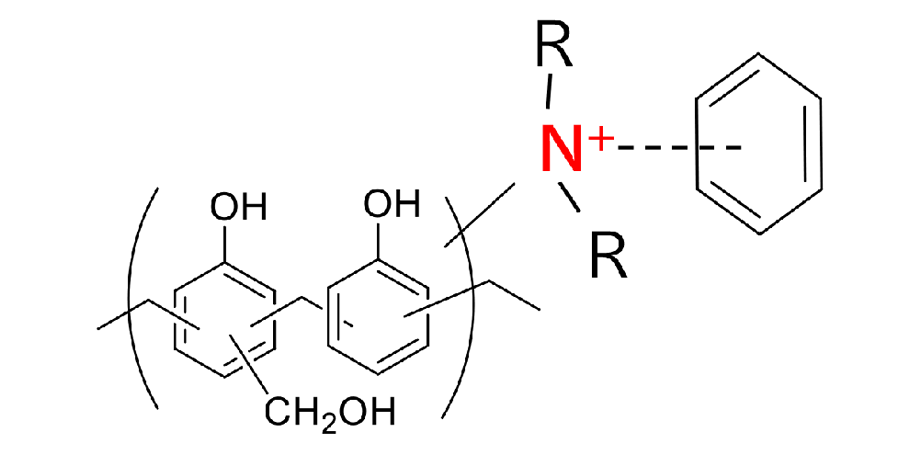
Cationic π interactions enhance miscibility with carbon materials, improving adhesion and durability.
Resin Properties
| Item | PR-56091 | PR-56542 |
|---|---|---|
| Type | Alcohol-based Liquid | Water-based Liquid |
| Viscosity(mPa・s/25℃) | 12 | 100 |
| Gelation time(Sec/150℃) | 270 | 300 |
| Resin content(%/135℃) | 42 | 40 |
| Fix carbon(%/800℃) | 27 | 16 |
Carbon Miscibility Evaluation
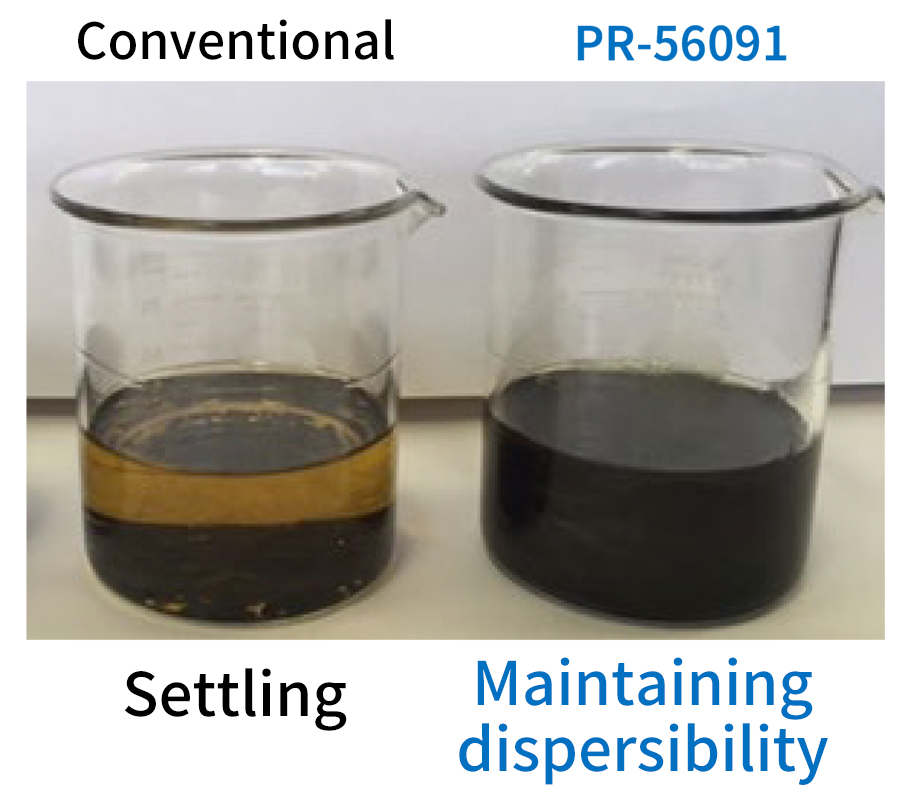
Evaluation conditions:
Add 50g of resin and 1g of chopped carbon fiber to a 100cc beaker, stir,
and visually inspect the dispersion state after leaving it for 1 day.
Recommended Usage
- Use as a binder for carbon-based composite materials.
- Cure at 150-250℃ or carbonize at approximately 800-1200℃ depending on the application.
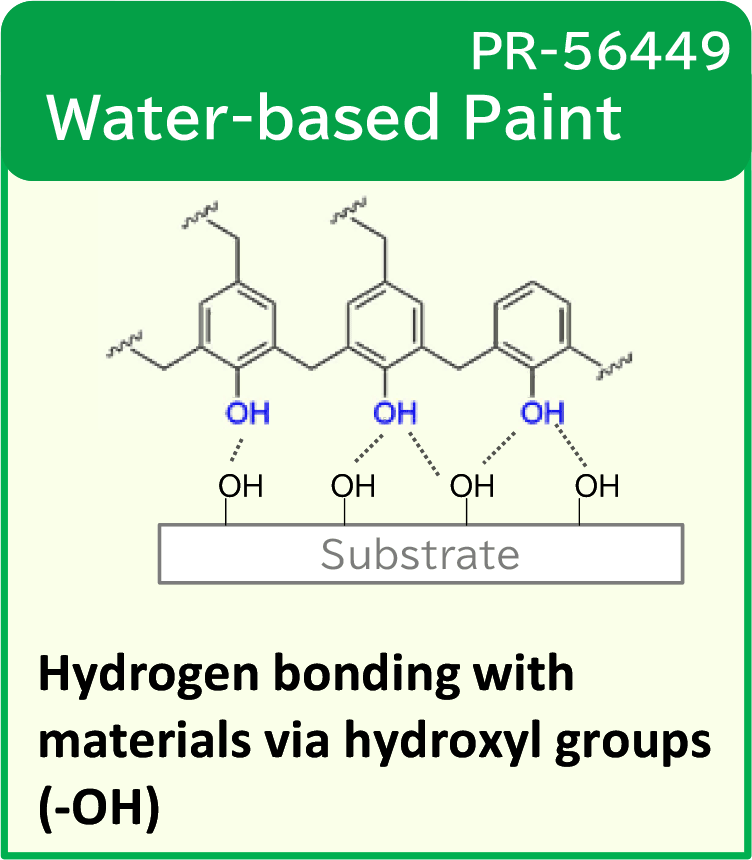
Phenolic Resin for Water-based Coating PR-56449
Adhesion Mechanism
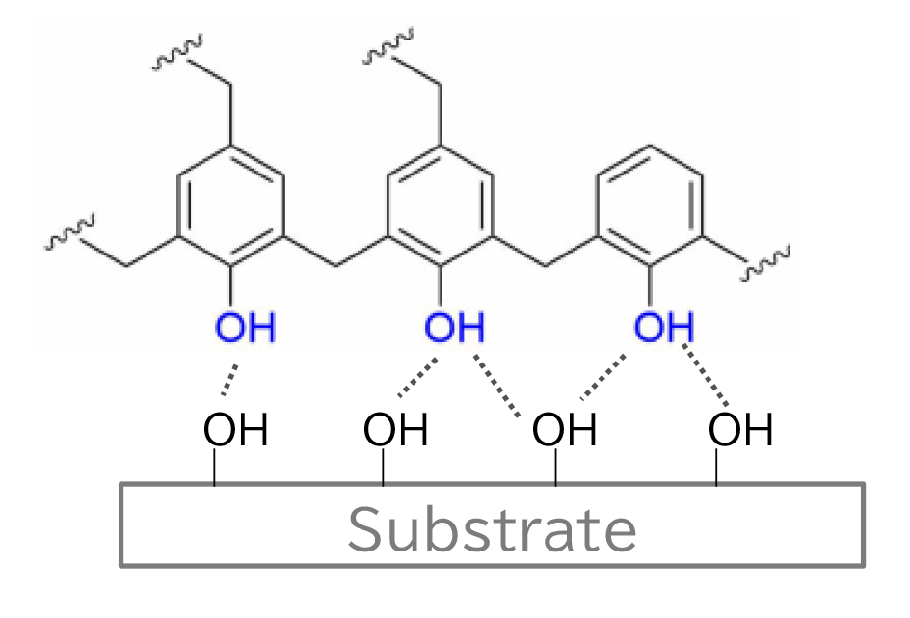
Hydrogen bonding with the substrate via hydroxyl groups (-OH) is expected to Improved adhesion, corrosion resistance, and heat resistance.
Resin Properties
| Item | PR-56449 |
|---|---|
| Type | Water-based Liquid |
| Free Phenol(%) | <0.1 |
| Free formaldehyde(%) | <0.1 |
| Viscosity(mPa・s/25℃) | 400 |
| Gelation time(Sec/150℃) | 68 |
| Resin content(%/135℃) | 40 |
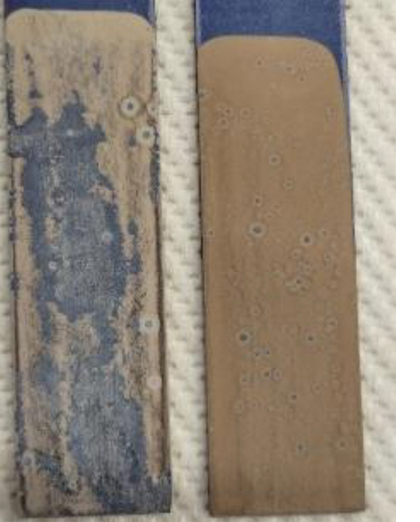
Heat Resistance Evaluation as Coating Additives
Phenolic Resin Addition Study (Left: None, Right: Added)
<Measurement conditions>
- ・The following 3 types of water-based paints were formulated by adding 10% of AQNOA™ PR-56449.
- ・Coated by10–20 μm thickness using a bar coater on acid-washed steel plates degreased with acetone.
- ・Cured for 20 minutes in a hot air oven at 150℃.
- ・After heat treatment for 4 days in 220℃ hot air oven, the following samples were rubbed 30 times with a cloth soaked in acetone.
①Melamine alkyd resin system
Water-based baking paint
②Urethane system water-based paint
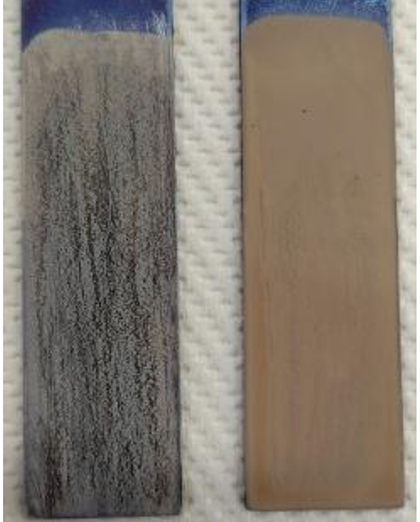
③Acrylic polymer system
water-based one component reactive paint
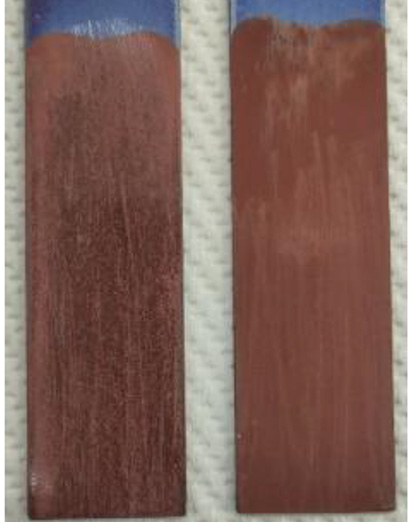
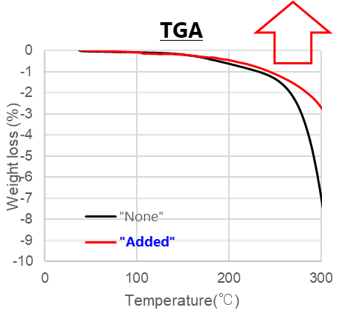
The addition of phenolic resin improves the heat resistance of the coating.
Recommended Usage
- Add approximately 5-20% to water-based coating.
- Bake coating (Heat to 150℃ or higher to thermoset)
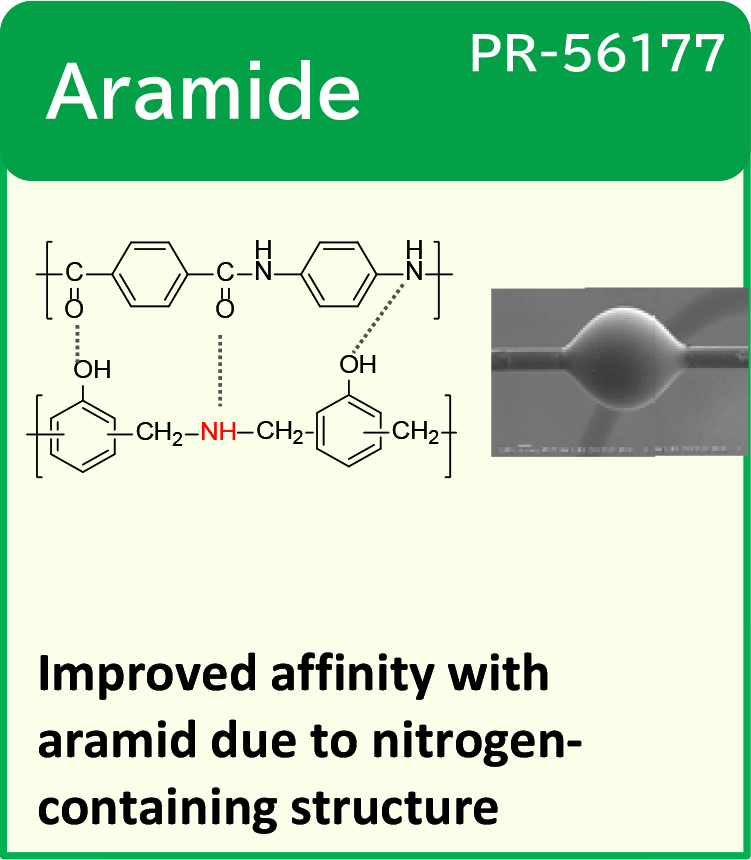
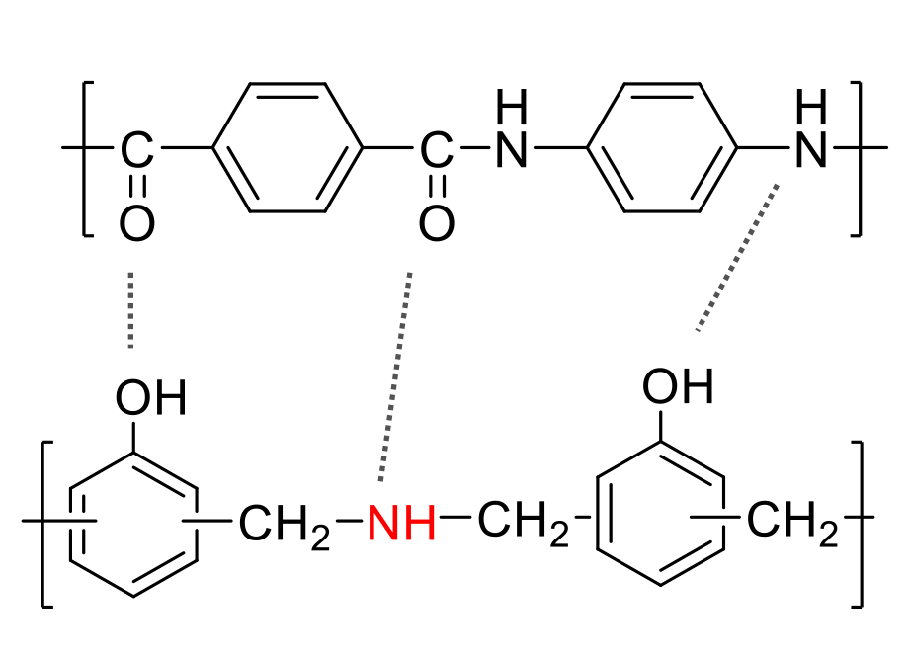
High-Adhesion Phenolic Resin for Aramid Fibers PR-56177
Adhesion Mechanism
The enhanced affinity with aramid due to nitrogen-containing structures is expected to improve the durability of composite materials.
Resin Properties
| Item | PR-56177 |
|---|---|
| Type | Methanol-based Liquid |
| Viscosity(mPa・s/25℃) | 10 |
| Gelation time(Sec/150℃) | 130 |
| Resin content(%/135℃) | 45 |
Evaluation of Adhesion to Aramid Fibers
Microdrop Test
Measure the load required to peel off a drop of resin cured at 190℃ for 30 minutes from an aramid monofilament.
Aramid fiber: Kevlar29 Shearing speed: 5mm/min
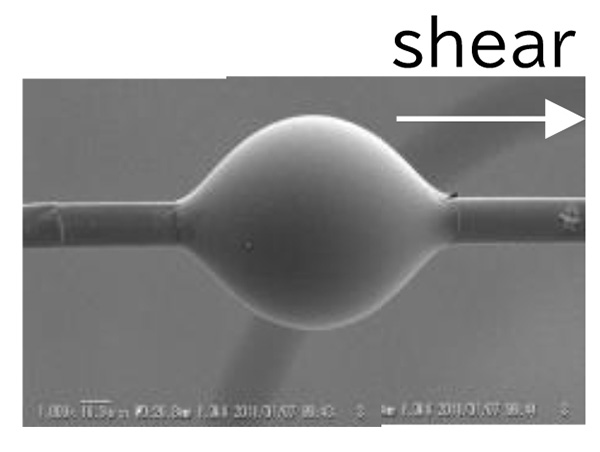
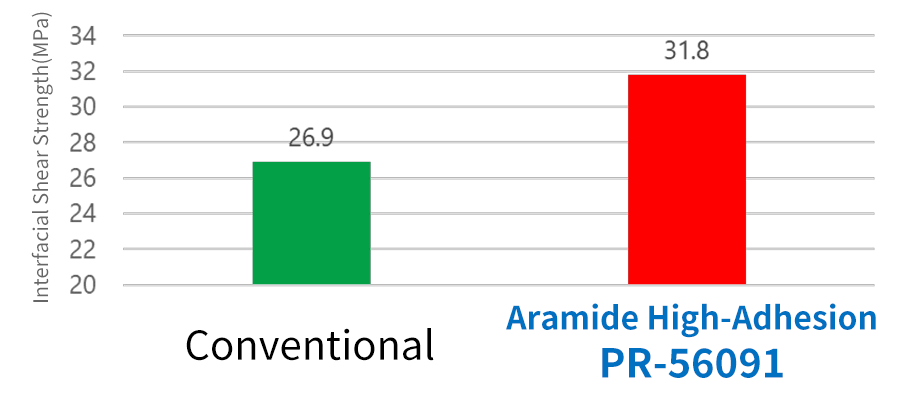
Adhesion to aramid fibers is improved.
Recommended Usage
- Adjust the resin dilution ratio with an alcohol-based solvent to achieve the target resin coating amount.
- After impregnating the substrate, dry and volatilize the solvent at 100℃ or below.
- Cure at 150-200℃ for 10-30 minutes.
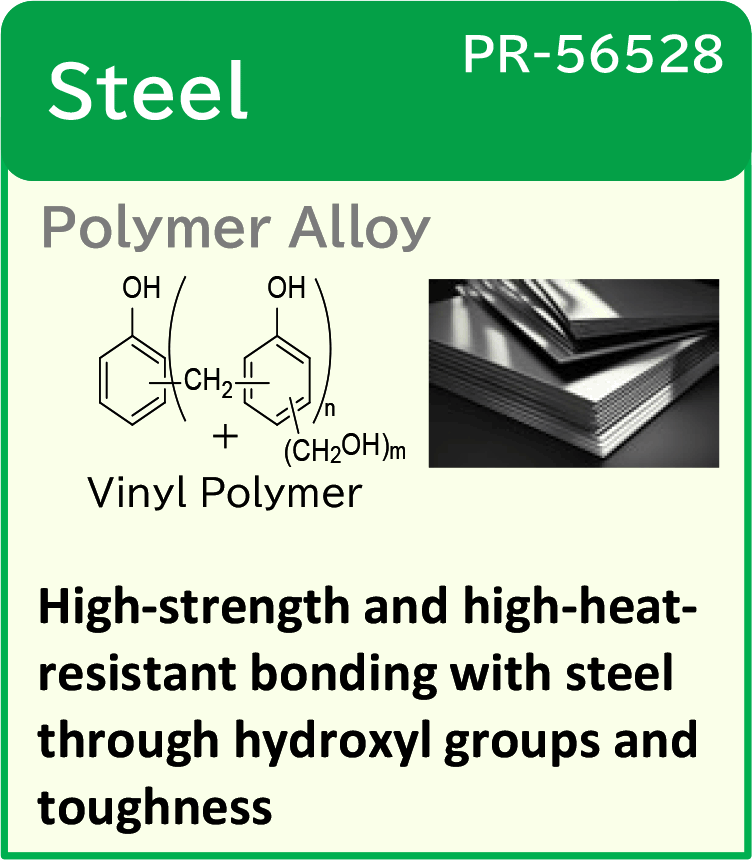
Phenolic Resin for Steel bonding
PR-56528(Water-based)
PR-56504(Solvent-based)
Adhesion Mechanism
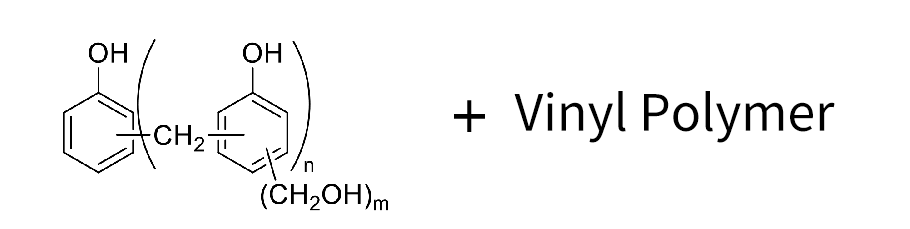
This is phenolic adhesive with high adhesion and toughness due to hydroxyl groups. It can be used as an adhesive with high bonding strength and high heat resistance.
Resin Properties
| Item | PR-56528 | PR-56504 |
|---|---|---|
| Type | Water-based Liquid | Methanol-based Liquid |
| Free phenol(%) | <0.1 | 5.1 |
| Free formaldehyde(%) | <0.1 | 0.2 |
| Viscosity(mPa・s/25℃) | 250 | 1000 |
| Gelation time(Sec/150℃) | 68 | 90 |
| Resin content(%/135℃) | 32 | 40 |
Adhesion Strength Evaluation
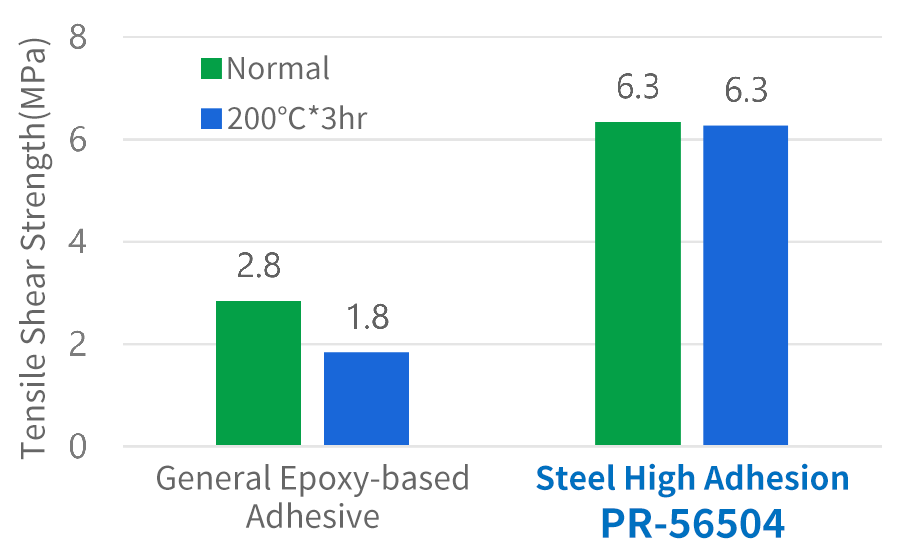
The strength reduction after a 200℃ heat history is minimal, indicating improved heat resistance.
<Evaluation Conditions>
- Film Thickness: 10±3 um
- Adhesion Area: 25mm × 6mm
- Substrate: Pickled Steel Sheet
- Bonding Conditions: Approx. 5MPa, 60℃ 2hr or 180℃ 30minutes
- Test Speed: 0.5mm/min
Recommended Usage
- After applying resin to the substrate, dry and volatilize the solvent (water or organic solvent) at 100℃.
- Pressure-cure at 150-200℃for 10-30 minutes.
Topics More
- 2026/03/31ProductsAnnouncement of the Development of High Tracking Resistance Epoxy Resin-based Coating Powder
- 2026/03/18ProductsLaunch of a New Series of High-Adhesion Phenolic Resins for Various Materials
- 2026/01/30ProductsDevelopment of Biomass PFA Resin-Based Prepreg with Superior Flame Retardancy for Aircraft Interior Materials
- 2026/01/15ProductsAdoption of Heat-Dissipating Insulating Sheet in Resin-Insulated Substrate Integrated Power Module
- 2026/01/13ProductsSustainability Topics: Launch of the Website Towards the Sustainability of Phenolic Resins
Exhibition more
- 2026/04/14 Aircraft Interiors EXPO
Phenolic Resins More
Call or email us about our Division/Department.
 Inquiry