

March 31, 2026
Sumitomo Bakelite Co., Ltd. (Headquarters: Shinagawa-ku, Tokyo; President and Representative Director: Shinichi Kajiya) has developed a coating powder material for electrical insulation with high tracking resistance*1. This material features a Comparative Tracking Index (CTI)*2 of 900V, making it a solvent-free epoxy resin-based insulating coating suitable for insulating high-voltage conductors such as busbars.
*1 Tracking resistance: Refers to the resistance against the “tracking phenomenon,” where electrical discharge on the surface of an insulator forms conductive paths (tracks) that act as electrical pathways, leading to short circuits (insulation breakdown) between wiring.
*2 Comparative Tracking Index (CTI): A standardized measure used to evaluate the tracking resistance of insulating materials. A higher CTI indicates superior tracking resistance.
Background of Development
To extend the driving range of electric vehicles (EVs) and shorten charging times, an 800V system for EV electrical systems (both receiving and supplying sides) is rapidly advancing, especially in Europe and the U.S. Beyond EVs, the trend toward higher voltages is expected to grow in mobile applications such as eVTOL*3 and electric vehicles, aiming for higher output and weight reduction. Additionally, 1kV-class applications are expanding in industries such as industrial machinery, offshore wind power generation vessels, solar power inverter systems, and large-scale battery systems.
As the number of high-voltage products is anticipated to increase, a higher level of tracking resistance for conductor insulation coatings is expected to ensure long-term reliability and safety. To meet these demands, we have developed an epoxy resin-based coating powder with a CTI of 900V.
*3 eVTOL: An acronym for "Electric Vertical Take-Off and Landing," referring to electrically powered aircraft capable of vertical takeoff and landing.
Features of the High Tracking-Resistant Epoxy Resin-based Coating Powder
Powder coatings are widely used alongside liquid coatings to provide insulation on conductor surfaces. From the perspective of environmental protection, shape stability, and productivity, solvent-free powder coatings offer advantages over liquid coatings. Among powder coatings, those based on thermoplastic resins lack adhesive strength between the coated conductor and the coating film, posing a risk of reduced insulation performance in use environments. On the other hand, our powder coatings are based on thermosetting epoxy resins, which chemically react with conductors during the coating process. This reaction ensures robust adhesion and enhances the reliability of insulation performance.
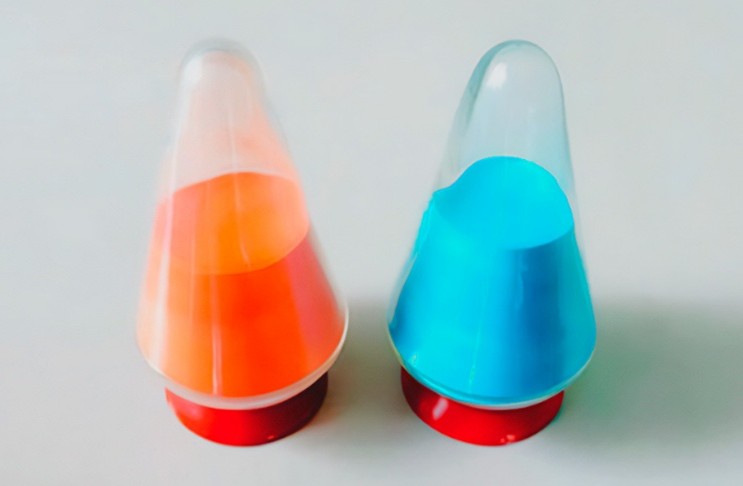
Typically, the breakdown voltage of epoxy resin coating powder films as insulators is exceptionally high, at 30–40kV/mm. However, the CTI, one indicator of insulation durability, is generally around 300–600V.
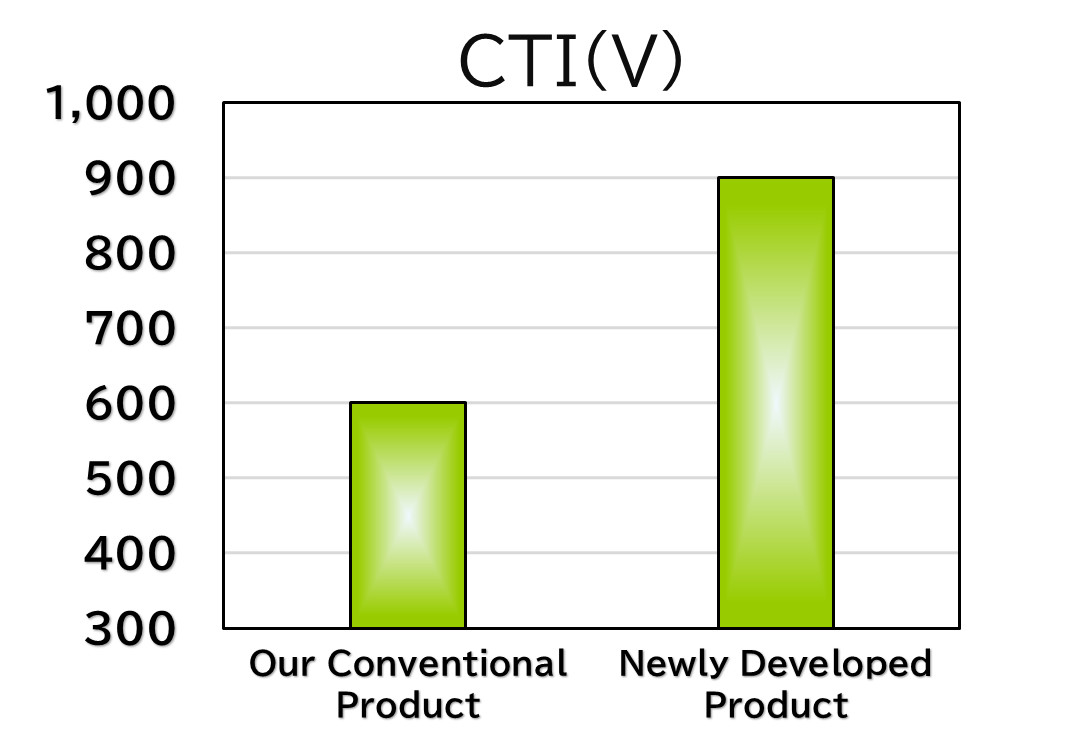
In contrast, for our product, we conducted internal testing to measure the CTI performance of our newly developed epoxy resin coating powder in accordance with the UL2597 STT*4 test, which is the UL standard for tracking resistance. The results confirmed that the developed product achieved a CTI of 900V, demonstrating performance that aligns with the trend toward higher voltages (See Chart 1 for reference).
*4 STT Test: Refers to the Surface Tracking Test, a test standard used to evaluate the tracking resistance of insulating materials intended for use at voltages exceeding 600V.
Advantages in Development and Production
This product carries a low risk of insulation performance degradation, even during long-term use under 900V operating conditions. This makes it possible to reduce creepage distances between conductors, contributing to the compact design and improved efficiency of electrical systems and components. Additionally, it allows for thin insulating coatings to be applied to conductors with various shapes without requiring molds.
Future Plans
In recent years, the shift toward 800V EV systems, particularly in Europe and the U.S., has been accelerating, driving an increasing demand for high tracking-resistant performance. While the primary application for this product is envisioned as EV battery busbars, we also aim to expand into other applications where high tracking resistance is required.
It has been confirmed that this product possesses the capability to achieve a CTI of 900V, and we plan to begin offering samples shortly. Moving forward, we will focus not only on meeting the needs of EV applications, but also on developing products that cater to a wide range of applications, such as busbars and bus rings used in drones and wind turbine motors.
Related Information

[Contact information]
Composite Materials & Molded Parts Sales Dept., Material Solutions Sales Division, Sumitomo Bakelite Co., Ltd.
TEL: +81-3-5462-4757