

Policy and Basic Approach
Environmental Policy
Our Group has established the Environmental Policy as a policy related to environmental issues pertaining to our Group (including biodiversity conservation). Our Group’s Environmental Policy is described on the following page.
Systems (Governance)
The system for supervision and management of environmental issues pertaining to our Group (including biodiversity conservation) are described on the following page.
Risk Management
The identification, assessment, and management of risks and opportunities related to environmental issues pertaining to our Group (including biodiversity conservation) are carried out in accordance with the risk management structure and risk management processes described on the following page.
Key Initiatives
The business activities of our Group rely on the abundance of nature. Based on the
philosophy of our
Policy on Responsible Care Activity, we understand the importance of conserving biodiversity, and have
become a promotion partner of The Declaration of Biodiversity by Keidanren . By understanding the
importance of biodiversity outlined in these guidelines, applying it to our basic management stance, and
following these declarations, we are working to reduce our environmental impact, complying with our
procurement policy, and engaging in dialogue with communities through conservation activities such as
setting up biotopes some of our business locations. Outside of Japan, we take part in local initiatives,
including planting rare tree species.
Furthermore, we are also working on Taskforce on Nature-related
Financial Disclosures (TNFD) initiatives. In order to determine the degree of reliance and impact of our
Company businesses on biodiversity and natural resources, as well as the accompanying risks and
opportunities, we have adopted the LEAP approach recommended by TNFD and started the “Locate” phase by
conducting a survey of the ecosystems surrounding the manufacturing sites of our Group. We have started
checking the positional relationship with key biodiversity areas by using the WWF Biodiversity Risk Filter
for the state of the ecosystem and by using IBAT for biodiversity.
Biotopes and their utilization initiatives
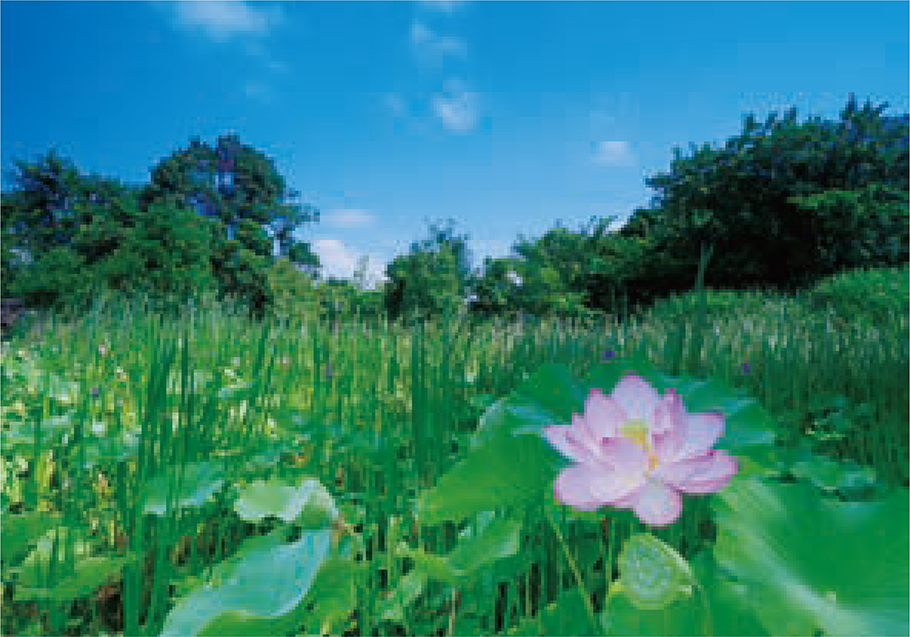
The results of an investigation into the relationship between the business sites of our Group worldwide and protected areas where biodiversity is considered important indicated that none of our business sites were located in these areas. Although not a protected area, the results of an ecosystem survey conducted in FY2011 at the site of our Shizuoka Plant located in Fujieda City, Shizuoka Prefecture, confirmed the presence of Japanese killifish, a vulnerable species (VU). After determining the strong need for preserving the biodiversity of this site, we decided to create a Company biotope. The creation and maintenance of the biotope were completed in March 2017. The biotope, which occupies about 5% of the Shizuoka Plant’s 287,000 m2 site, serves as a habitat for a wide variety of fauna and flora, including ancient Oga lotus and jewel beetles, among others, in addition to Japanese killifish.
We continue to engage in communication with local communities, such as by spreading the word on the significance of our biotope for biodiversity to the community and supplying some of the Japanese killifish that have taken root and multiplied within our biotope to neighboring locations.
In FY2024, there were 83 visitors despite a slight reduction in general visitor applications compared to the previous fiscal year when general public visits resumed after the COVID-19 pandemic. We continue to engage in dialogue with neighboring elementary schools regarding biodiversity conservation efforts centered on the biotope, and as in the previous year, we have responded to requests for visiting guest lessons at schools, field trips using the biotope, and other activities. We provided a total of approximately 40 killifish to one elementary school in the neighborhood, and gave visiting guest lessons at two schools (164 students in total) on how to conserve Japanese killifish while introducing our SDGs initiatives. We have been working in collaboration with the municipal board of education regarding our visiting guest lessons to investigate adding an on-demand system under which lessons can be taken at any time. In addition, two field trip visits to the biotope were held (total of 212 students), one in the spring and the other in the fall. We are continuing to deepen exchanges with the local community focusing on neighboring elementary schools.
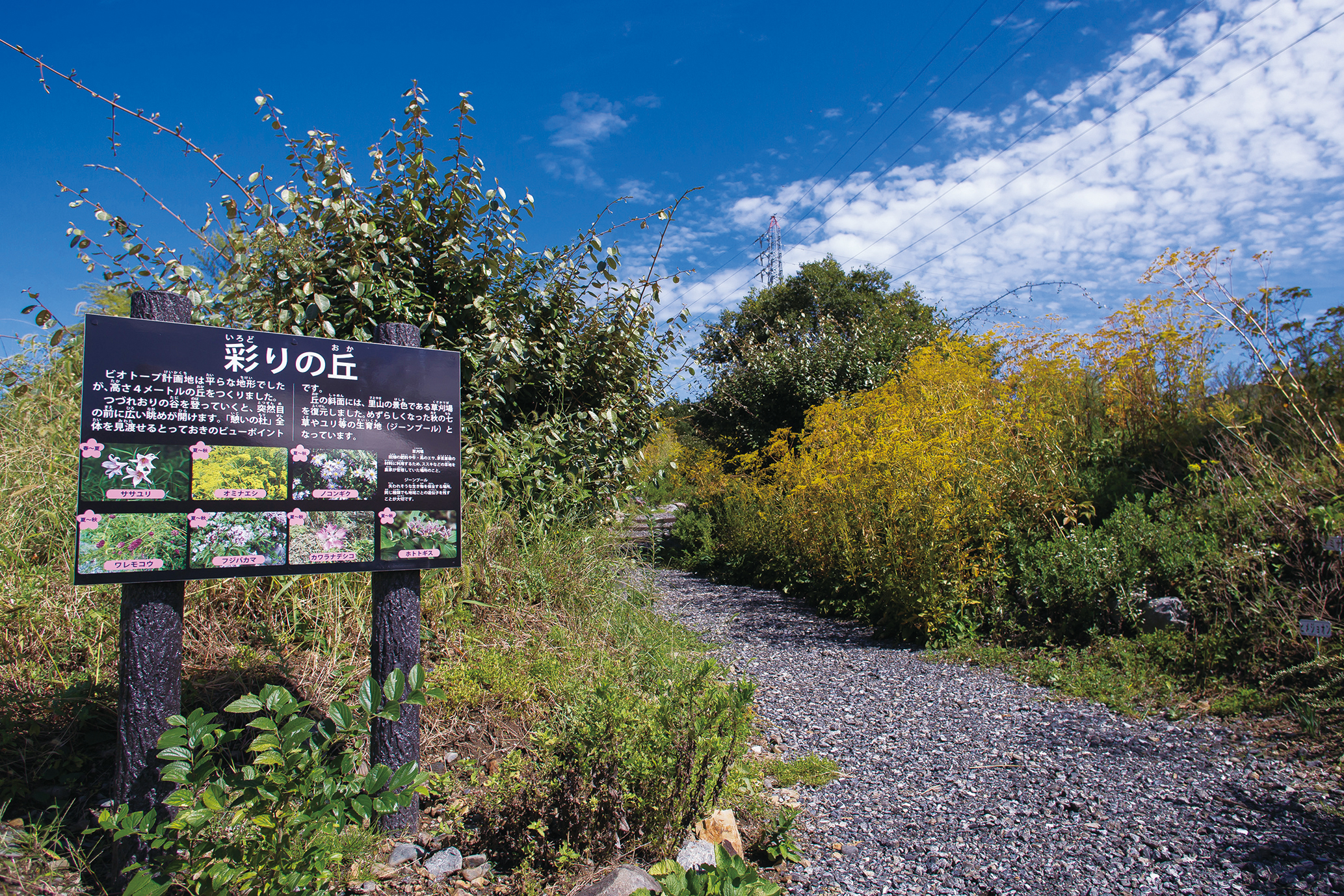
Biotope “Ikoi no Mori”
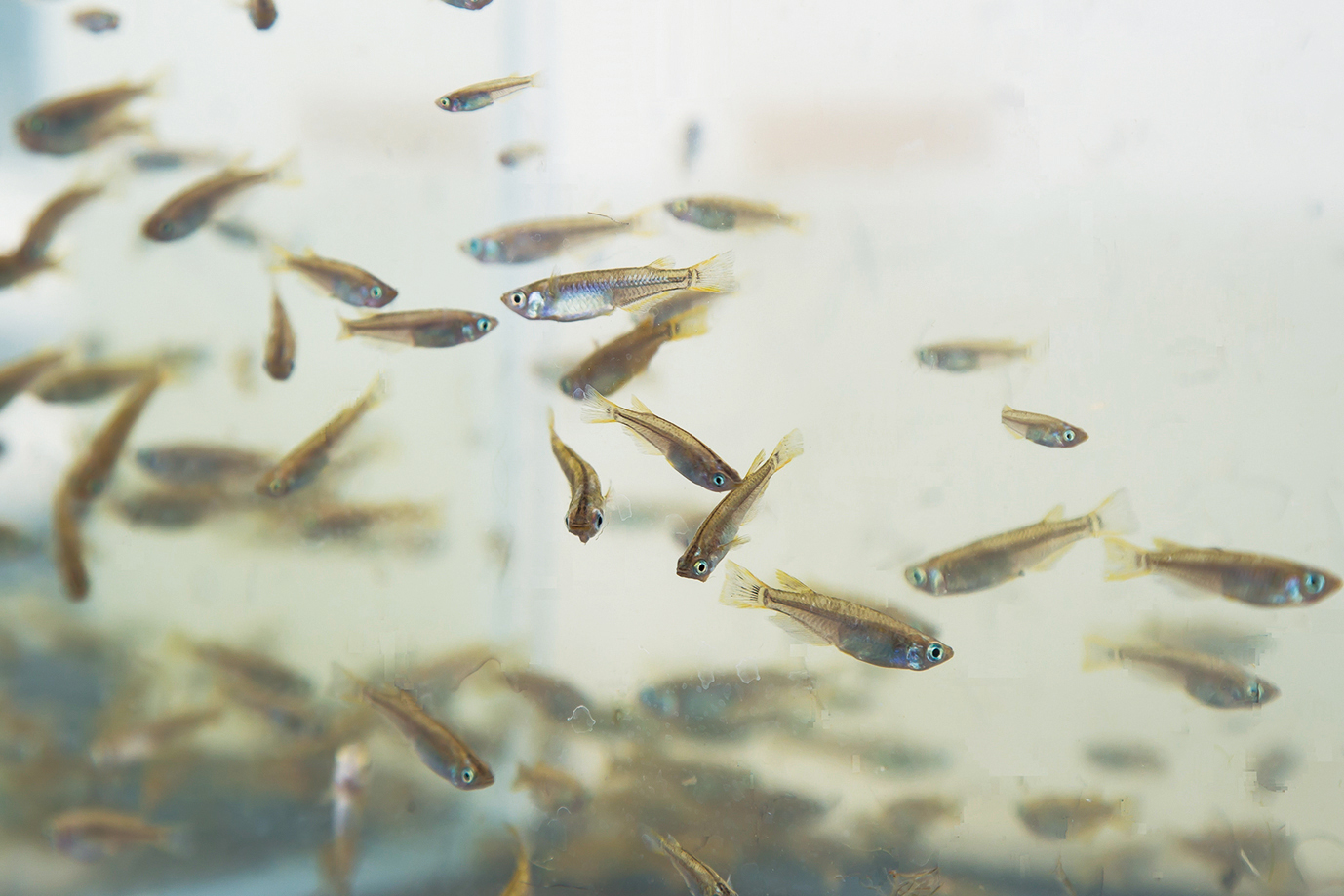
Japanese killifish (a vulnerable species (VU))

Elementary school student excursions and lessons
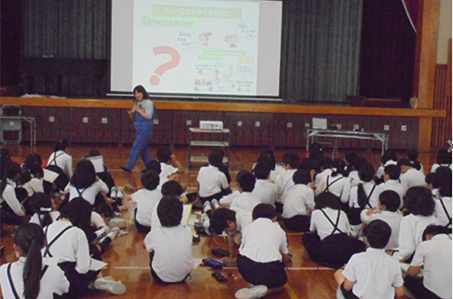
Elementary school visiting guest lesson
Biotope “Ikoi no Mori”
In the Shizuoka Plant of Sumitomo Bakelite Co., Ltd., 2100 Takayanagi, Fujieda, Shizuoka 426-0041
For reserving tours, see the website.
Participation in the “30 by30 Alliance for Biodiversity” and recognition of the “Nationally Certified Sustainably Managed Natural Sites”
At the G7 Summit held in the UK in June 2021, G7 leaders agreed the G7 2030 Nature
Compact and all G7
countries pledged to conserve or protect at least 30% of their national land and sea areas by 2030
(‘30by30’) toward the goal of halting and reversing biodiversity loss (nature positive).
Toward
domestically achieving the 30by30 target, Japan has launched the 30by30 Alliance for Biodiversity at the
initiative of the Ministry of the Environment. In addition to expanding Japan’s current protected areas
such as national parks and improving its management quality, a scheme is implemented to register areas
that have been conserved by the private sector and others as OECM*.
In June 2022, our Company joined
the 30by30 Alliance for Biodiversity, aiming to obtain OECM certification for the “Ikoi no Mori” biotope
at the Shizuoka Plant and to contribute to the conservation of 30% of land and sea by 2030.
|
The Ministry of the Environment began a system in 2023 to certify areas where biodiversity is being preserved through private initiatives as OECM. The certified sites, excluding areas overlapping with protected areas, will be registered in the international OECM database. In applying for “Nationally Certified Sustainably Managed Natural Sites” registration in the first half of FY2023, the “Ikoi no Mori” biotope at the Shizuoka Plant was certified as “Nationally Certified Sustainably Managed Natural Sites”. 
|
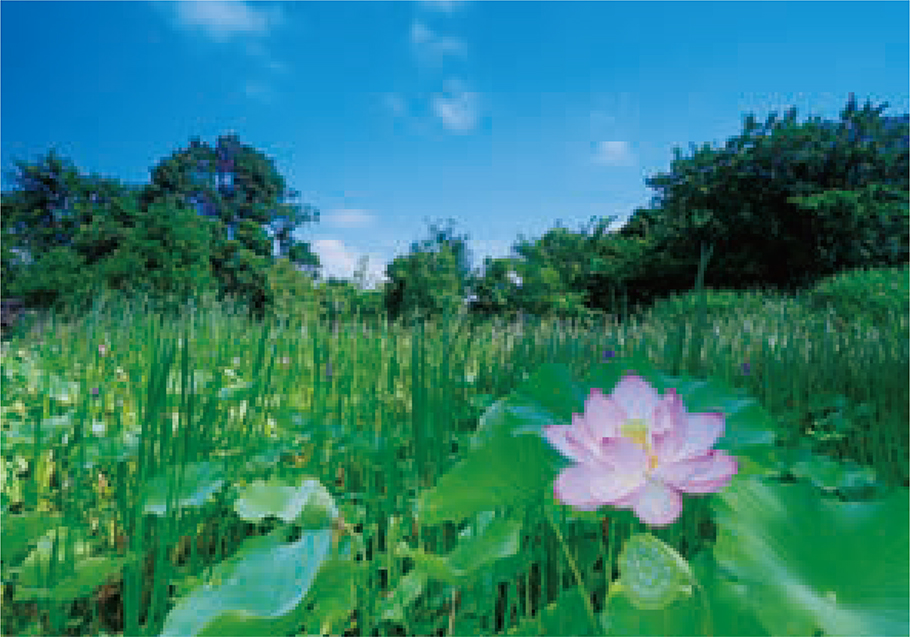
Biotope “Ikoi no Mori” |
- * Areas other than protected areas that contribute to biodiversity conservation. Abbreviation for Nationally Certified Sustainably Managed Natural Sites.
What is an “Nationally Certified Sustainably Managed Natural Sites”?
As part of its efforts to achieve nature positive, the Ministry of the Environment started a system in 2023 to certify areas that contribute to the conservation of biodiversity as a result of initiatives by the private sector and others (i.e. corporate forests, satochi-satoyama landscapes, and urban green spaces) as Nationally Certified Sustainably Managed Natural Sites. Applications were accepted from April 2023 and experts reviewed them. The Minister of the Environment designated 122 locations (across 35 prefectures) as Nationally Certified Sustainably Managed Natural Sitess for the first time. The total area of these 122 locations is approximately 77,000 hectares, which is approximately 0.2% of the total land of Japan, exceeding Tokyo’s 23 wards.
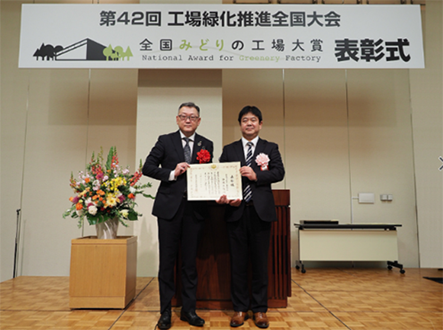
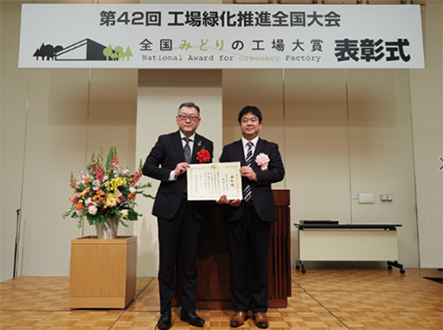
Receiving the Director-General’s Award of the Kanto Bureau of Economy, Trade and Industry in the FY2023 National Award for Greenery Factory
|
Our management of greenery and initiatives using our biotope was praised and received the Director-General’s Award of the Kanto Bureau of Economy, Trade and Industry of the FY2023 Factory Greening Award Program, a program to award plants and other facilities that achieved significant improvement of the environment in and around the plant based on the Factory Location Act’s philosophy of pursuing harmony with the local environment around plants (collectively called the National Award for Greenery Factory). |
|
Initiative to Protect Forest Ecosystems
Our Company contributes to conservation of biodiversity by protecting forest
environments through our support for activities including forest thinning projects and afforestation
activities of the environmental NPO Office Chonai-kai (Office Community Network) .
We have
supported forest thinning mainly in Iwate Prefecture since FY2008 by expanding the use of Paper
Products that Contribute to Forest Thinning Efforts promoted by the Morino Chonai-Kai (Forest
Neighborhood Association).
The cumulative amount of paper used since FY2008 is approximately
101,600 kg, which corresponds to the thinning of 6.89 hectares.
At our business sites in Indonesia
, we are conducting forestation activities to cultivate mangrove forests for protecting a variety of
marine life, and activities for mitigating climate change such as cultivating mango seedlings. Moving
forward, we will continue to conserve biodiversity tailored to the environment surrounding each of our
business sites.
● Amount of Paper Products That Contribute to Wood Thinning Efforts Used by Sumitomo Bakelite Co., Ltd.
Cultivation of mango seedlings
- 2025/12/17SustainabilitySumitomo Bakelite Co., Ltd. Earns Top “A List” Rating for Climate Change Efforts from CDP
- 2025/11/28SustainabilityIntegrated Report 2025 of Sumitomo Bakelite Co., Ltd. has been issued.
- 2025/05/09SustainabilitySBT Certification granted by the SBTi (Science Based Targets initiative)
- 2025/04/14SustainabilityLaunch of “Project Team to Prepare for Mass Production of Functional Membranes for Hydrogen Production”
- 2025/02/25SustainabilitySumitomo Bakelite Co., Ltd. Receives Gold Medal in EcoVadis Sustainability Assessment
Email us about Sustainability
Inquiry