

SBHPP (High Performance Plastics Business of Sumitomo Bakelite Co., Ltd.) is a global leader of phenolic resins with more than 100 years of history. SBHPP is committed to transitioning to phenolic resin industry that contributes to the realization of a sustainable society.
"REPHENOL" represents for
Our environmental commitment toward phenolic resins.
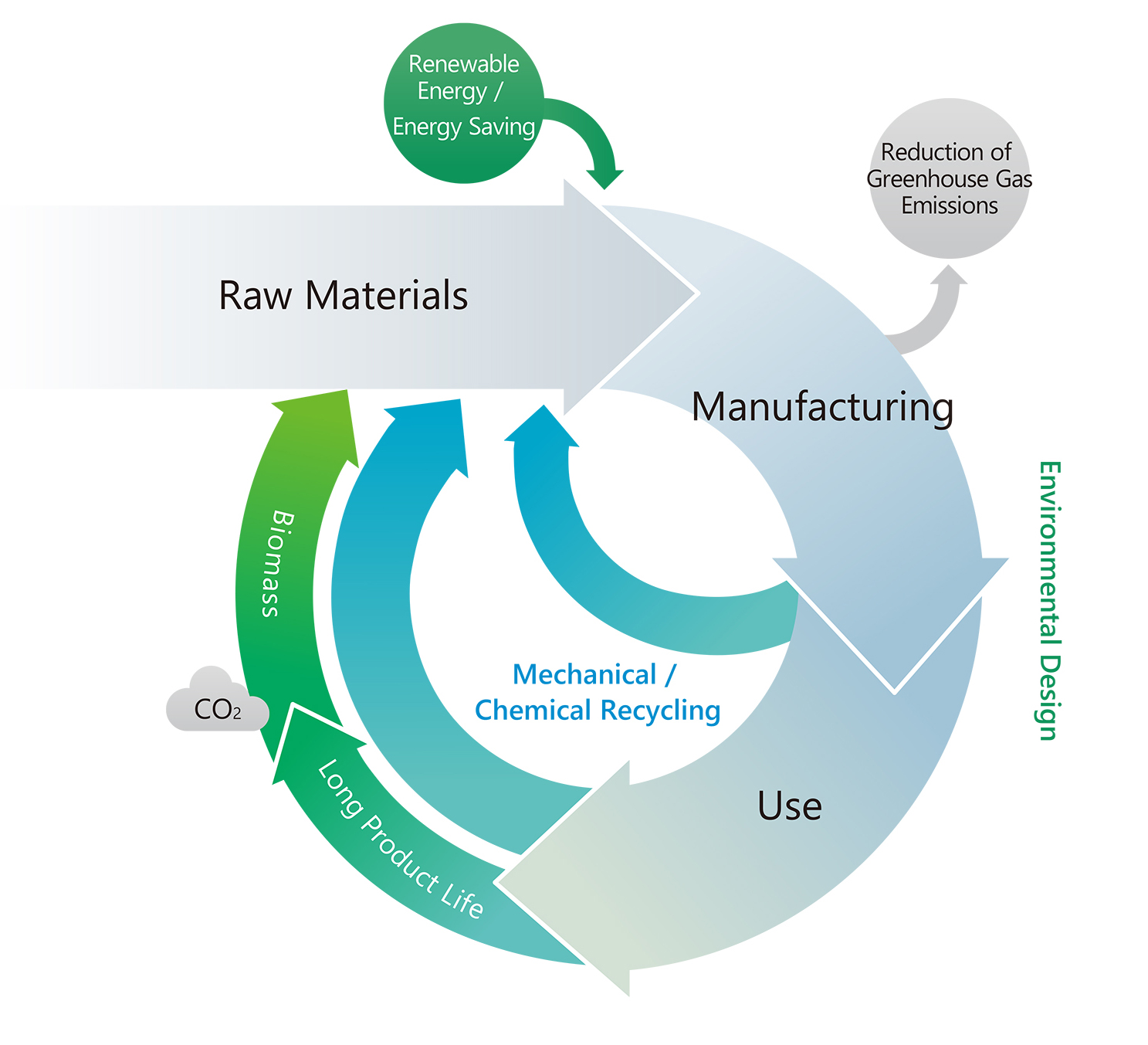
Transition of Phenolic Resin Industry to Circular Economy
In recent years, in order to realize a sustainable society, there has been a strong demand for a change in the direction of plastics from "manufacture and disposal" to "circulation with reduced environmental impact."
As a global leader in the phenolic resin industry, SBHPP aims to realize a sustainable and circular economy suitable for phenolic resins.
What are Plastics?
Plastics (Resins) can be broadly divided into thermoplastic resin and thermosetting resin.
Thermoplastic resin
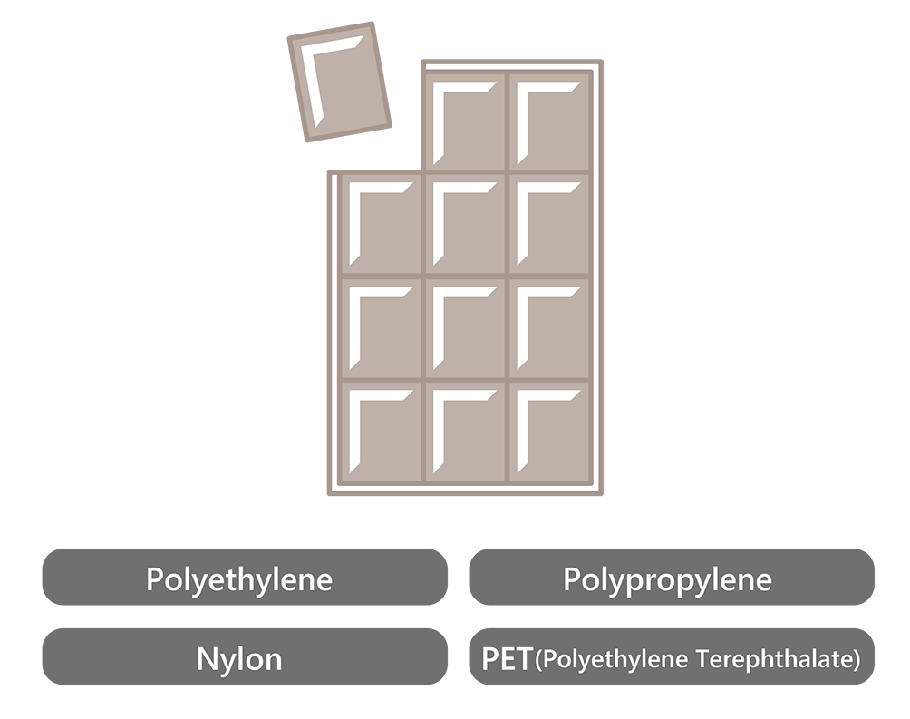
Softens when heated and hardens when cooled. An example would be chocolate.
Excellent in mass production, it is widely used in everyday products such as plastic bottles, food
packaging, and daily necessities.
Thermosetting Resin
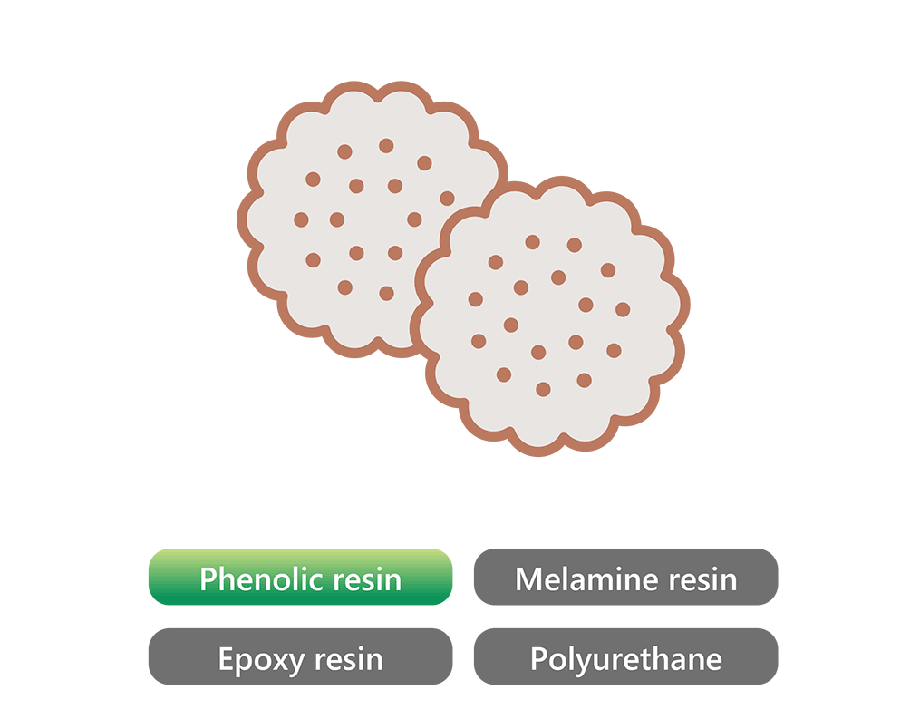
Due to their excellent strength and heat resistance, they are often used in durable, long-life products such as automotive and electrical parts.
About Phenolic Resins
Phenolic resins are the most widely used and representative type of thermosetting resins (Figure 1).
They are particularly durable and can withstand long-term
use for
decades or more.
They are also used as a material with rigidity that can replace metals and
heat resistance
that can withstand temperatures above 300°C (Figure 2).

Efforts to Achieve Sustainability of Phenolic Resin
SBHPP is engaging toward carbon neutral and a circular economy for phenolic resins.
SBHPP has been working to implement in society recycling technologies
(mechanical/chemical recycling and biomass) that can reduce GHG emissions.
Examples of our efforts in phenolic resins are shown below. Click for more information.
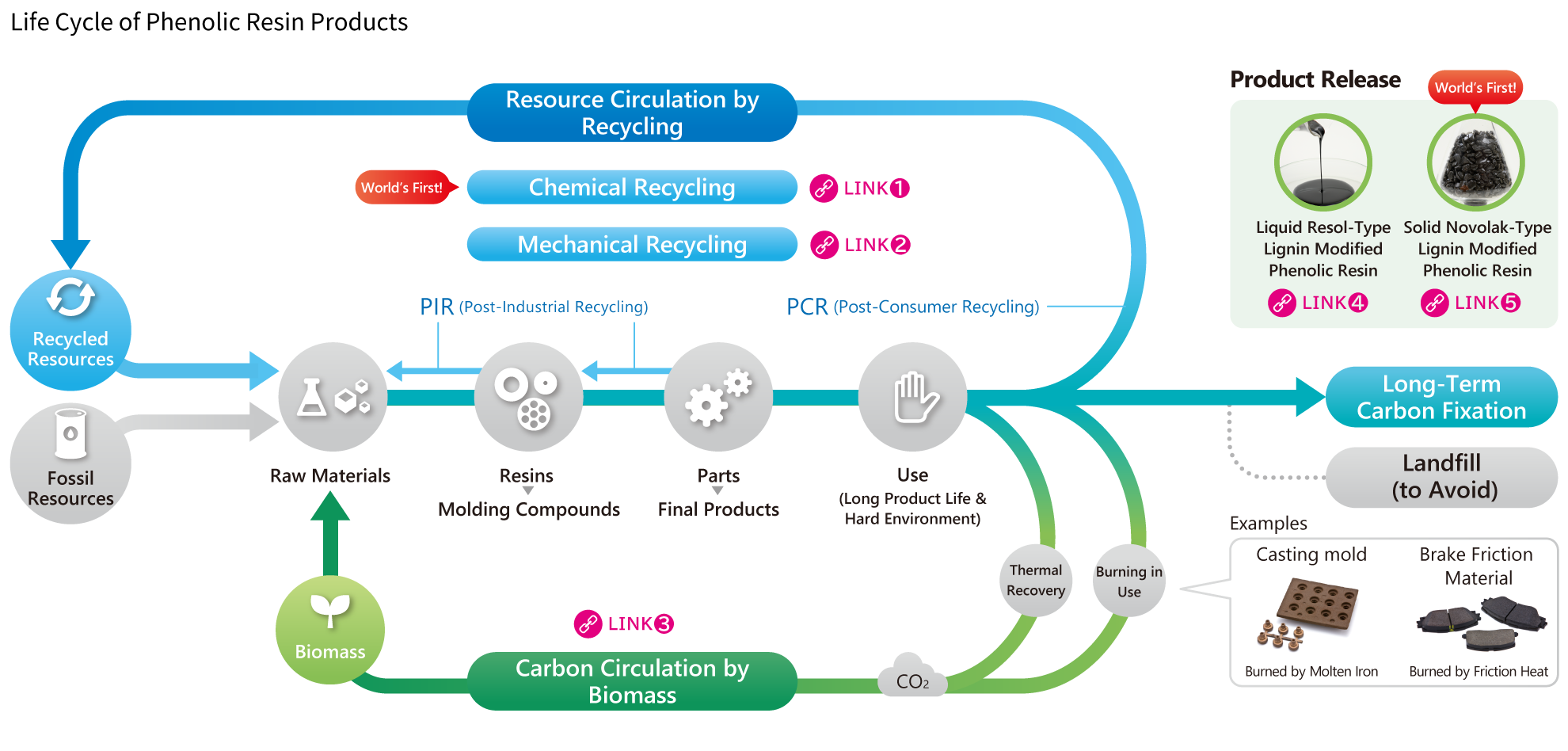
 Chemical Recycling
 Mechanical Recycling
 Carbon Circulation by
Biomass
Carbon Circulation by
Biomass Liquid Resol-Type Lignin Modified
Phenolic Resin
Liquid Resol-Type Lignin Modified
Phenolic Resin  Solid Novolak-Type Lignin Modified Phenolic
Resin
Solid Novolak-Type Lignin Modified Phenolic
Resin- 2026/09/28ProductsClosure of Kenton Plant of Durez Corporation (US)
- 2026/08/20ProductsDevelopment of New SUMILITERESIN™ ECP Epoxy Coating Powders for Coil-End Insulation
- 2026/06/12ProductsDevelopment of a High Tracking-Resistant Laminated Board (900V)
- 2026/03/31ProductsAnnouncement of the Development of High Tracking Resistance Epoxy Resin-based Coating Powder
- 2026/03/18ProductsLaunch of a New Series of High-Adhesion Phenolic Resins for Various Materials
Call or email us about our Division/Department.
 Inquiry