Research and Development Roundtable

Research and Development RoundtableSPECIAL INTERVIEW

Cultivating talent and technology to take on challenges:
Our research and development capabilities
Our strengths lie in our technical expertise and ability to deploy it

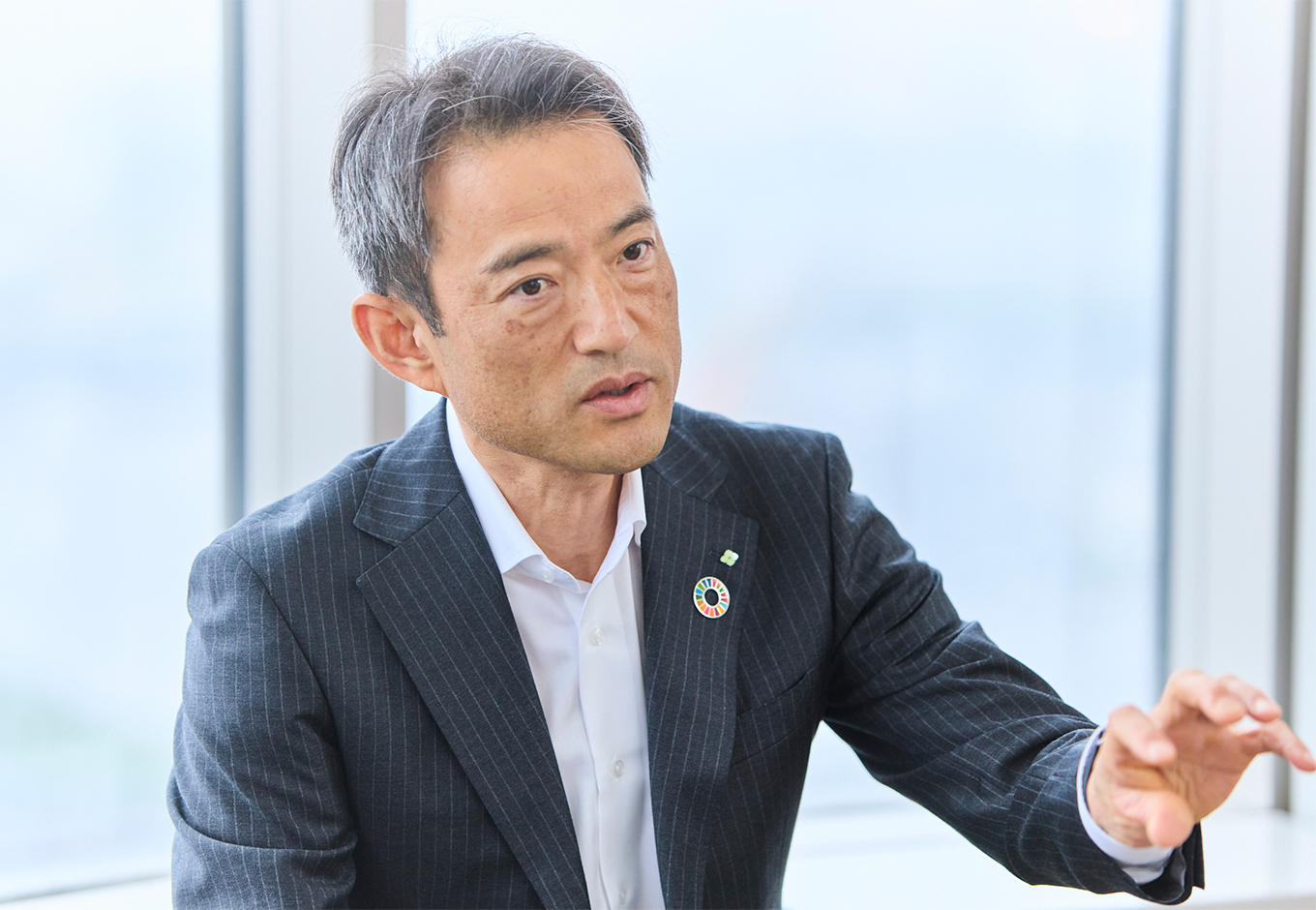
Osamu Ohnishi
Osamu Ohnishi
Executive Officer, General Manager of Research & Development Division
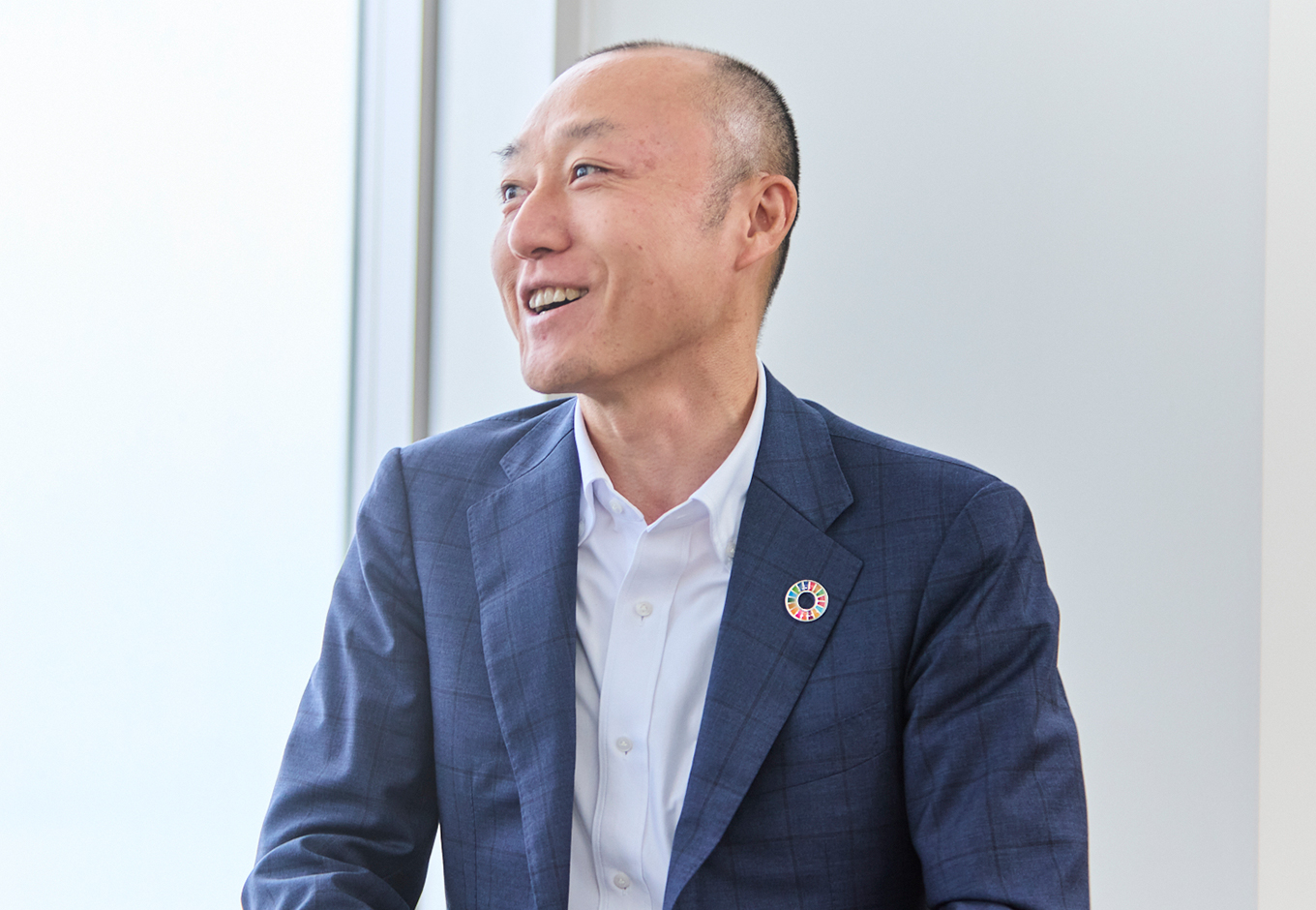
Makoto Takamoto
Makoto Takamoto
General Manager of Advanced Materials Research Laboratory
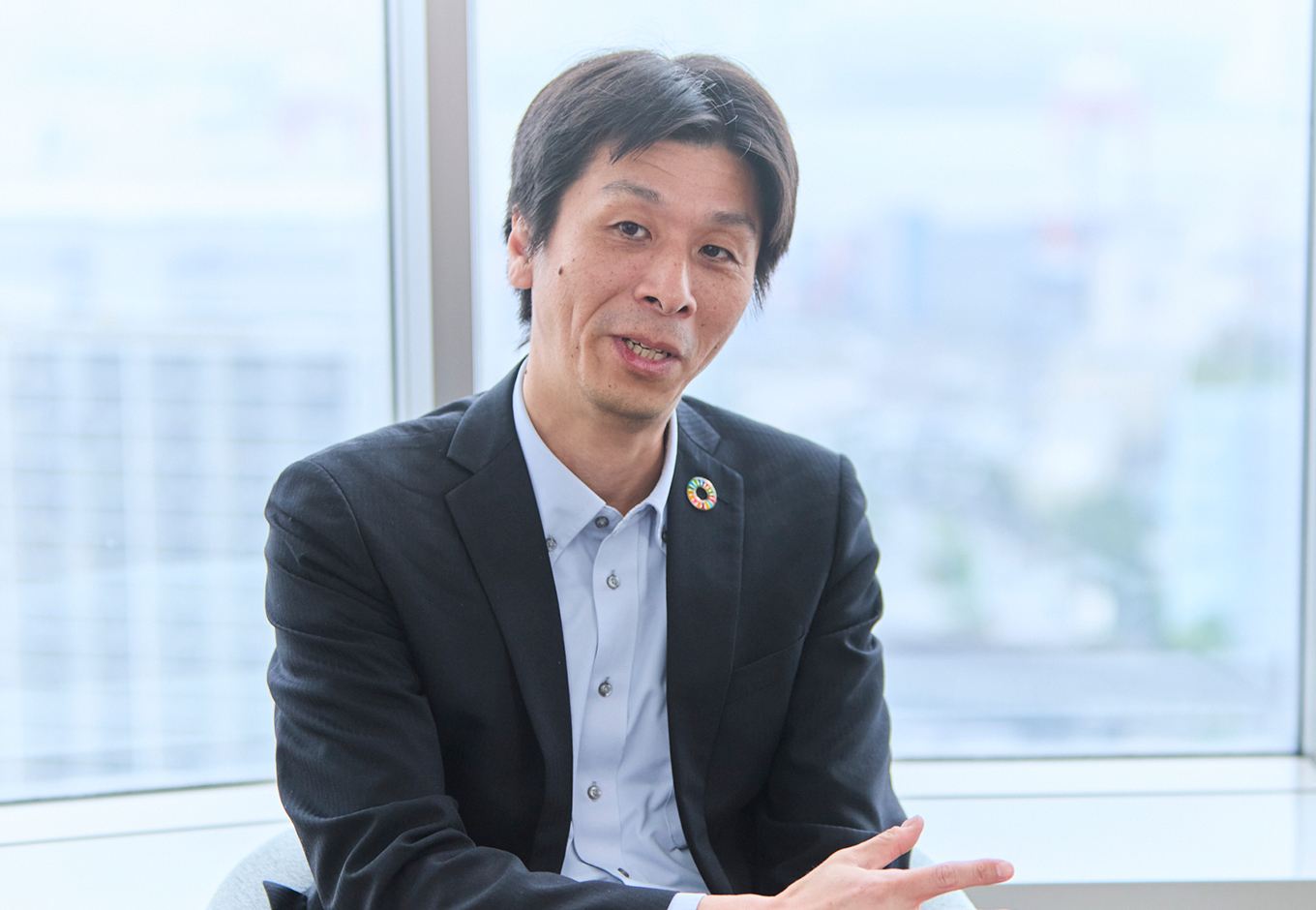
Hironari Mori
Hironari Mori
General Manager of Information & Telecommunication
Materials Research Laboratory

Our strengths lie in our technical expertise and ability to deploy it

Mori:
Our Company’s technical strengths include our outstanding expertise in compounding of organic polymers and organic-inorganic composite technology. This allows us to create products with added value that would be impossible with a single material, which is connected to profits.

Ohnishi:
I agree. One of our strengths is that we can carry out the whole process in-house, from material design (synthesis and formulation) to processing. Resins, catalysts, and so on form the core of product design. The ability to synthesize and process these in-house is what sets us apart from other companies. Another strength is that we make products for so many sectors: semiconductors and electronic materials, automotive and aircraft, medical and pharmaceutical, food, construction, and energy.

Takamoto:
Take for example heat dissipation sheet materials used in power modules. We can leverage the strengths of each research laboratory: the base material is designed by the Advanced Materials Research Laboratory, products using that material are developed by our application research laboratories, and so on, resulting in unique capabilities that other companies simply cannot match. Having such a broad scope of business also means we have wide-ranging expertise in research and development. We have recently started using materials informatics (MI) to leverage all this expertise and effectively utilize the data, which enables us to develop high-quality products faster.

Osamu Ohnishi
Osamu Ohnishi
Executive Officer,
General Manager of Research & Development Division
General Manager of the R&D Planning and Promotion Department
Osamu Ohnishi joined the Company in 1997. He has worked in departments including the HPP Technology Development Laboratory and was previously General Manager of the Advanced Materials Research Laboratory. Since 2025, he has been General Manager of the Research & Development Division and General Manager of the R&D Planning and Promotion Department, responsible for feasibility studies on new topics, resolving technical issues at each application research laboratory, and intellectual property.

A variety of programs to develop autonomous human resources

Ohnishi:
When it comes to human resource development, my focus is on cultivating people capable of innovation. It is important to keep past technologies going, but new value is created by adding your own unique essence or venturing into completely new areas. I want developers with this kind of ambition to gain the ability to come up with their own research topics. It is also vital to cultivate autonomy: professional developers should be able to identify problems, set research topics based on their own experience, and tackle challenges with determination. Our Research & Development Division has been running the SBinno program for around ten years to accelerate new product development. This program gives young developers the chance to work on their own research topics for one year, taking on challenges with participants from each research laboratory.

Mori:
Many of our developers are young and enthusiastic about innovative development. That’s why we are moving away from the traditional trial-and-error style of research toward using MI and digital transformation to comprehensively validate designs from the molecular design stage. At the Information & Telecommunication Materials Research Laboratory, we are focusing on developing talent with digital skills through active participation in internal training courses to train data scientists.

Makoto Takamoto
Makoto Takamoto
General Manager of Advanced Materials Research Laboratory
Makoto Takamoto joined the Company in 2003. Previously General Manager of the Information & Telecommunication Materials Research Laboratory, in 2025 he was appointed General Manager of the Advanced Materials Research Laboratory, working on the development of cutting-edge materials.

Takamoto:
When I talk to young developers one to one, they often say “I want to be involved in developing products that contribute to society.” We have our own Innovation Management System (IMS) which supports the planning process when launching a research topic, by looking at marketability, competitive advantage, and sales and profit forecasts. Being able to see the impact that your own work has in the real world is a source of motivation and a driving force for growth. If people have enthusiasm but do not know how to develop their ideas, I hope this can show them a way forward.

Ohnishi:
It’s as if we take ideas that have sprouted in the SBinno program, and nurture them into trees through the IMS. We have the tools in place, so now it’s up to us as managers to show how we put them into practice to enhance awareness and produce actual results.

Mori:
Interaction between research laboratories is also essential for personnel development and revitalizing the organization. Working in the same laboratory for a long time tends to narrow your perspective, so finding out about other divisions’ research can be a source of inspiration. I hope developers will widen their knowledge and come up with new ideas through networking events such as technical discussion meetings and personnel exchanges.

Creating new value with the One Sumibe system of collaboration between departments and organizations

Ohnishi:
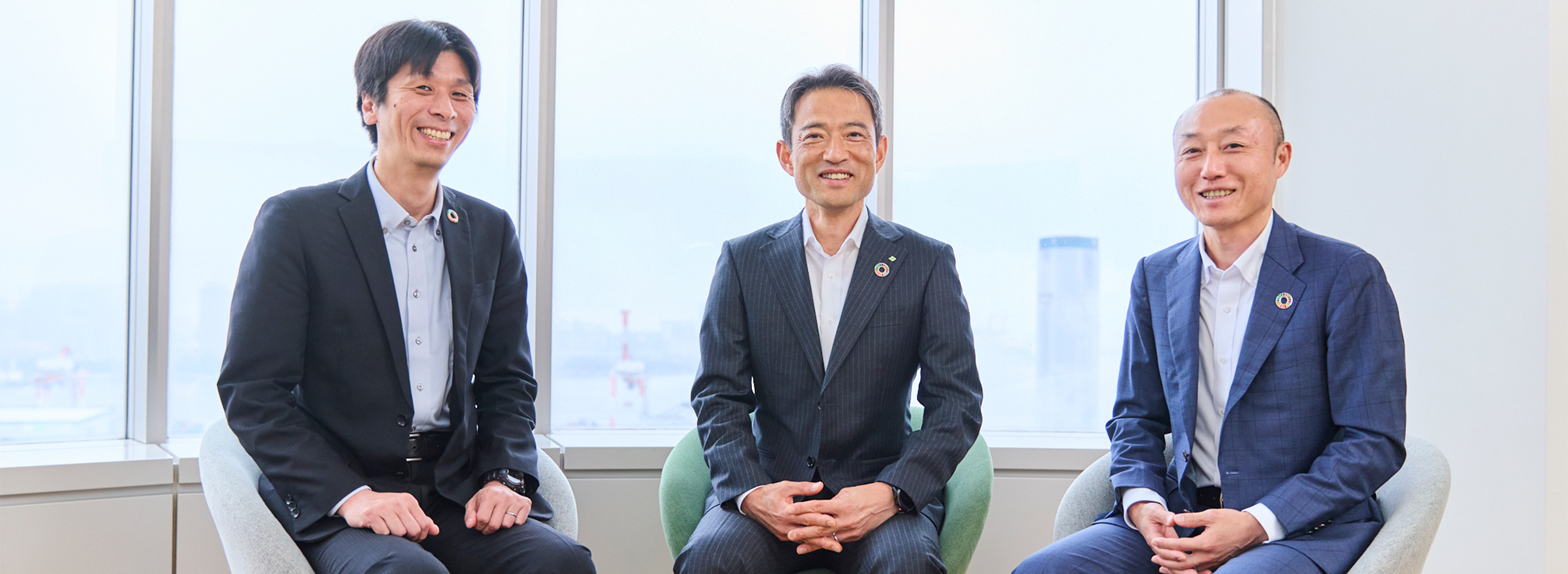
Speaking of interaction, the General Managers of each research laboratory meet quarterly to discuss various issues. Additionally, each application research laboratory holds monthly meetings to discuss creating new business and expanding existing business. Actually, the three of us have moved between each of our current positions throughout our careers.

Takamoto:
I think experiencing each stage of the product development process—research planning, fundamental research, and applied research—is very meaningful in terms of gaining an overview of the whole process.

Ohnishi:
We have always had collaboration between departments, but this has been further invigorated in recent years by the One Sumibe Policy introduced when Chairman Fujiwara was President. This has created an open organization allowing free communication at ground level.

Mori:
This is also extending to external collaboration. We have jointly established the Co-Creation Research Center for Materials and Processes for Next-Generation Semiconductors with Tohoku University this year. Leveraging the university’s expertise, we have started work on exploring customer requirements and advancing technological development.

Hironari Mori
Hironari Mori
General Manager of Information & Telecommunication Materials Research Laboratory
Hironari Mori joined the Company in 2002, initially working at the research laboratory for materials for electronic devices. In 2023, he was appointed General Manager of the R&D Planning and Promotion Department of the Research & Development Division. Currently, as General Manager of the Information & Telecommunication Materials Research Laboratory, he is involved in research and development of materials including semiconductor encapsulation materials and coating materials, substrate materials and materials for mobility solutions.

Takamoto:
The idea is to actively harness external expertise for anything we cannot handle within the Company. This could involve cutting-edge analytical equipment or collaboration in areas where we do not have sufficient knowledge. We believe that working with expert partner companies and universities will help us reach our goals more quickly.

Ohnishi:
The role of the R&D Planning and Promotion Department is to match up research laboratories with internal and external partners. If Mr. Mori’s research laboratory is having trouble with something, we find out which department within the Company can deal with it; or if Mr. Takamoto’s research laboratory needs a certain technology, we can suggest an external company or university. The relationship of trust we have on a daily basis certainly helps this kind of collaboration go smoothly, which makes it easier to create new value.

R&D focus areas and initiatives to create innovation

Ohnishi:
As a Company, we have set out a policy of transforming our product/business portfolio with a focus on the three areas of ICT, mobility, and healthcare. My role is to drive innovation in these areas and create new products and businesses, not forgetting to explore new technologies with a view to new business creation in five- or ten-years’ time. At the R&D Planning and Promotion Department, as well as matching up research partners and strengthening external collaboration, we are also investing in venture capital. The aim is to incorporate promising new materials from around the world into our technical base, leading to unique product development.

Takamoto:
At the Advanced Materials Research Laboratory we take a dual approach: developing materials based on topics from the business divisions and application research laboratories, and independent research of our own. Looking ahead to our Group’s medium-term targets and beyond to 2030, it is vital for fundamental research laboratories to create new products and core technologies with a greater impact. Vice President Inagaki has talked about producing “technology that can hit a home-run.” To make this a reality, we need to continually plant promising seeds, so we will transform our fundamental development portfolio and focus on topics that align with the Company’s policy. As for responding to environmental issues, we are developing “dismantlable” polymers which break down easily after disposal, for use in the mobility field. With a joint venture, we are also working on joint development of plastics made from plant-based materials.

Mori:
We have always had four key products at the Information & Telecommunication Materials Research Laboratory: semiconductor encapsulation materials, adhesives, wafer protection materials, and substrate materials. However, materials are diversifying in today’s semiconductor industry, and new technologies are emerging every day. We need to translate this into new business. We are currently strengthening our approach through new product development programs and internal and external collaboration, with a particular focus on liquid encapsulation materials. Solid encapsulation materials have mainly been used in the past, but liquid encapsulation materials have high added value as they make it possible to fill smaller spaces. In terms of environmental initiatives, we are aiming to reduce CO2 emissions and energy consumption by finding ways for materials previously stored at −20 degrees to be stored at room temperature. Team members from our laboratories and plants are keen to obtain Life Cycle Assessment (LCA) certification, and this commitment supports our research and development efforts.

Ohnishi:
As a Group operating in multiple business areas, I believe it is crucial to expand LCA-certified personnel and SDGs certified products. At the Research & Development Division, we are working to turn promising research themes into Company-wide projects. In April this year, we launched a Project Team to Prepare for Mass Production of Functional Membranes for Hydrogen Production. As well as providing support to quickly commercialize new technologies, we want to continue improving our environmental response.

What leaders can do to create a culture of challenge

Mori:
Coming up with the seeds of ideas for new products and new business is vital for the sustainable growth of the organization. Without sufficient seeds, product development and innovation will eventually disappear. To develop people who can come up with seeds, I strive to clearly communicate the direction of the Company and department to my team members. I think this helps them understand how their own work connects to the Company’s goals, making it easier to take on new challenges in addition to their daily work. Ideally, I would like to provide a forum where everyone can spend about half a day freely discussing ideas, once every week or two. This would increase opportunities to come up with seeds for new products, leading to growth of the Company as a whole.

Takamoto:
When I moved to the Advanced Materials Research Laboratory this April, the first thing I said to the researchers was “I value psychological safety, so please do not hesitate to voice your opinions.” This is because, as a leader, I place importance on listening to all opinions, not dismissing those that seem outlandish at first. Going forward, after building this solid foundation, I want to work with academia and partner companies to discover needs that have not yet come to light. When it comes to product development, being involved from the planning and design stage before the specifications are finalized gives us a competitive advantage. I want to continue contributing to these mechanisms and systems.

Ohnishi:
Looking back at my own career, the most rewarding times have been when I was involved in launching new projects or products. Now, I want to nurture as many young employees as possible who will take on such challenges with a positive attitude. Measures may not always have an immediate effect, but it is important to create an environment where people will not be criticized. In recent years, the level of challenge is now taken into account in our personnel evaluation system, and we are starting to establish a culture of challenge. For this culture to take root, managers like us must nurture new ideas together and help motivated people to succeed. When these people take on positions of responsibility and build on their successful experiences, it should create a chain of challenges in our Company. I believe this cycle will eventually lead to exciting results.