
A modular EHT platform with low drug adsorption and removable pillars enables multi-organ coupling and improves cardiotoxicity assessment

Introduction
Cardiotoxicity remains a primary driver of drug attrition, largely due to the limited predictability of animal models. Human iPS cell-derived engineered heart tissues (hiPSC-EHTs) offer enhanced translational validity for cardiac safety assessment; however, single-organ EHT assays lack hepatic metabolic activity. Consequently, compounds undergoing hepatic clearance (e.g., terfenadine) are frequently misclassified as false positives.
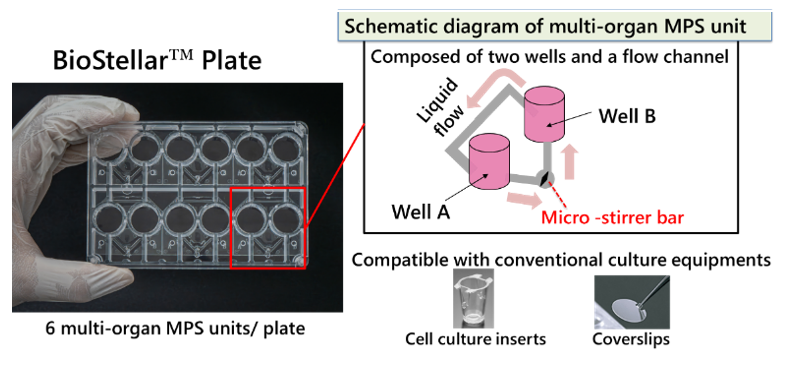
To enable multi-organ physiological interactions, we commercialized the BioStellar™ Plate -an on-chip pump-integrated microphysiological system (MPS), originally developed by Tokai University [1]. Leveraging this platform, our collaborators integrated hiPSC-EHTs into the BioStellar™ Plate, successfully establishing a liver-hiPSC-EHT co-culture model that demonstrated metabolism-dependent cardiotoxicity [2]. However, a critical limitation persisted: conventional EHT components fabricated from polydimethylsiloxane (PDMS) exhibited severe non-specific drug adsorption, leading to inaccurate drug exposure estimates.
To overcome this material limitation, we, in collaboration with the Center for iPS Cell Research and Application, Kyoto University, developed the MyoFlex™ Plate, featuring proprietary Plastic Thin Film (PTF) Pillars engineered to minimize drug adsorption [3]. In this study, we combined the MyoFlex™ Plate with the BioStellar™ Plate to establish an optimized, low-adsorption liver-hiPSC-EHT platform. By simultaneously addressing PDMS-induced drug loss and incorporating hepatic metabolism, this integrated system enables precise PK-PD modeling to improve the translational predictability of preclinical cardiotoxicity assessment.
MPS products overview
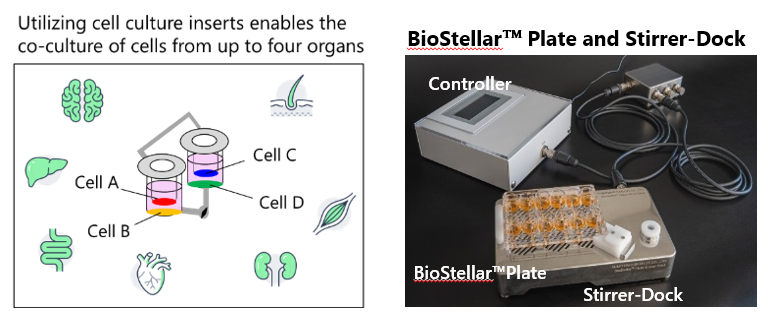
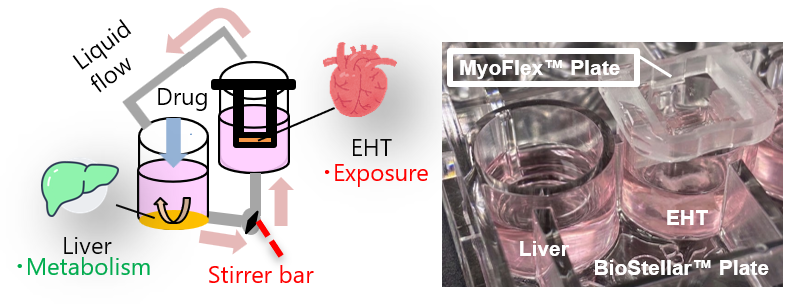
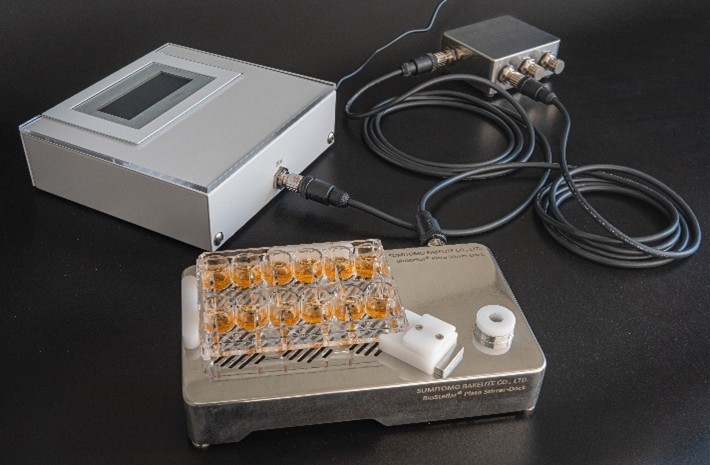
BioStellar™ Plate is an MPS featuring a structure where a flow channel connects two wells. Perfusion culture can be easily performed by rotating a micro-stirrer bar within the flow channel. By incorporating cell culture inserts or coverslips, it is possible to co-culture up to four different cell types (Fig. 1 and 2).
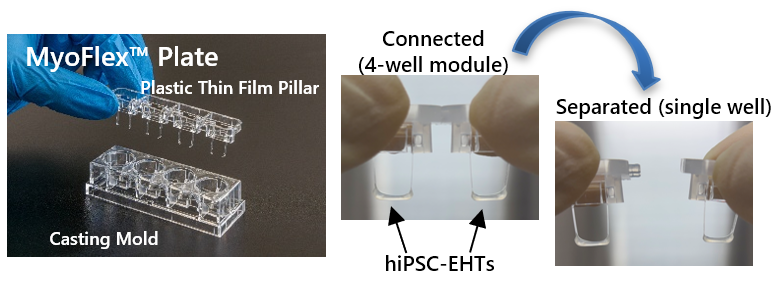
MyoFlex™ Plate is a new EHT platform for precise safety/efficacy assays. Low-adsorption PTF Pillars ensure accurate toxicity assessments, while their unique shape enables sensitive contractile force evaluation. The specialized ultra-low-attachment casting mold reduces fabrication time and ensures smooth EHT release from the casting mold. As a unique feature, the MyoFlex Plate can be separated into four compartments, allowing the fabricated EHTs to be individually used for various assays. (Fig.3)
Experimental overview
Firstly, we demonstrated the long-term culture and functional stability of hiPSC-EHTs for 60 days using the MyoFlex™ Plate. Secondly, to evaluate the system’s ability to suppress non-specific binding of small molecules while incorporating hepatic drug metabolism, we conducted comparative experiments using two co-culture setups of Primary Human Hepatocytes (PHH) and hiPSC-EHTs within the BioStellar™ Plate: one paired with the MyoFlex™ Plate and the other with a commercially available PDMS pillar device, which is known for non-specific adsorption issues.
| Cell mixture | Detail | Mixing ratio |
|---|---|---|
| Cell A | iCell Cardiomyocytes2 01434 (C1016,FUJIFILM Cellular Dynamics, Inc.) | 10 |
| Cell B | Human Cardiac Fibroblast (C-12375, Promocell GmbH) | 1 |
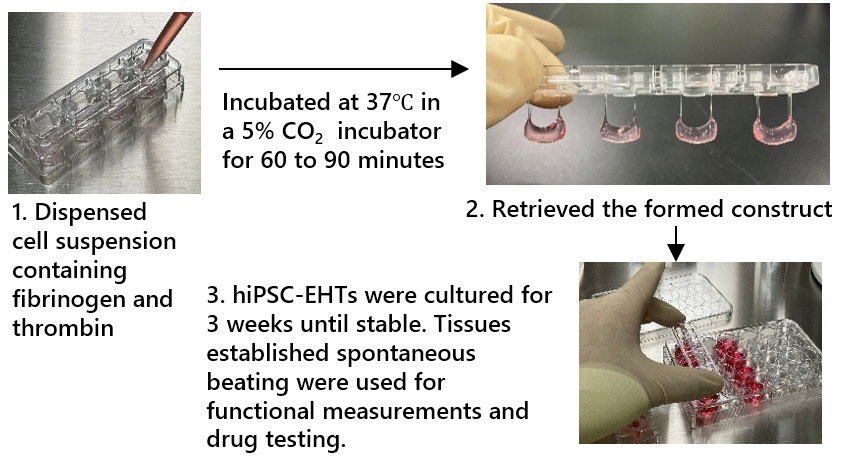
Video acquisition and analysis
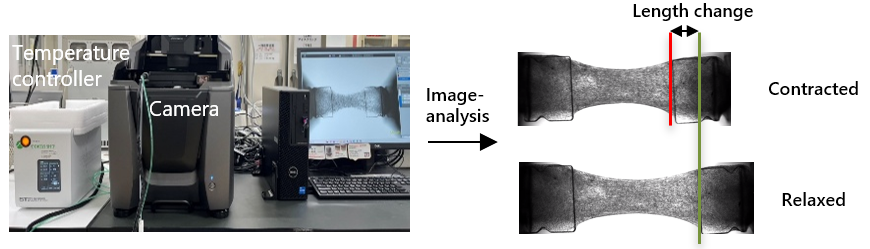
The contractions of EHTs were recorded under temperature-controlled conditions at 37°C. Recorded videos were analyzed using image-analysis software to quantify contractile length change (maximum minus minimum EHT length) and beating rate (beats per minute, BPM). All subsequent functional readouts reported in this study were derived from this video-based analysis workflow.
Terfenadine cardiotoxicity assays
Approximately three weeks prior to the co-culture, hiPSC-EHTs were prepared on a MyoFlex™ Plate. Once stable formation and spontaneous beating of the hiPSC-EHTs were confirmed, the EHTs were pre-cultured in a liver-specific medium for 96 h. Primary human hepatocytes (PHHs) were directly seeded into well A of a BioStellar™ Plate two days before co-culturing. After the 96-h pre-culture of the EHTs in the liver-specific medium, the EHTs were transferred into well B of the BioStellar™ Plate, opposite the well containing the pre-cultured PHHs. Perfusion co-culture was then performed using the liver-specific medium. Once the length change and beating rate (BPM) of the EHTs were confirmed to have stabilized, terfenadine was administered to the liver side at various concentrations. The length change and BPM were subsequently evaluated at 1, 2, 4, 24, and 48 h post-treatment.
| Well | Contents |
|---|---|
| Well A | Cryopreserved Human Hepatocytes (H1500.H15C+, XenoTech) |
| Well B | Engineered Heart Tissue (EHT) generated on MyoFlex™ Plate using iCell Cardiomyocytes2 01434 (C1016,FUJIFILM Cellular Dynamics, Inc.) |
Results
Long-Term Culture and Functional Stability of hiPSC-EHTs
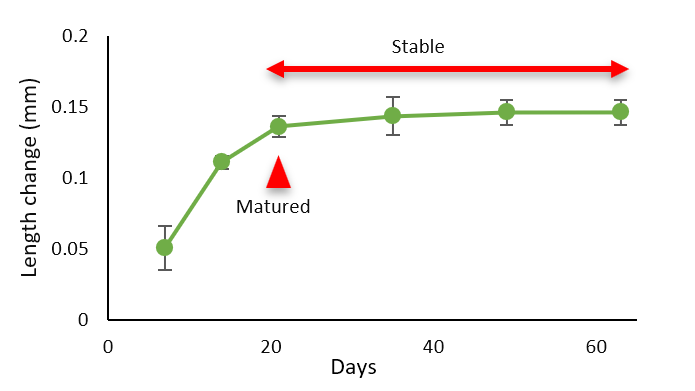
Long-term functional stability of hiPSC-EHTs on MyoFlex™ Plate. Beating persistence and length change were maintained for at least 60 days.
Accurate Detection of Terfenadine-Induced Cardiac Arrest in the MyoFlex™ Plate vs. PDMS Pillar Device
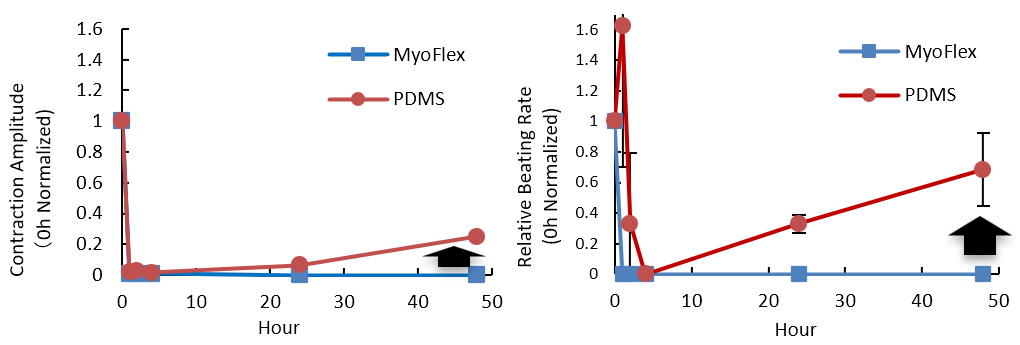
While the PDMS Pillar device showed a recovery in hiPSC-EHT’s contraction distance and BPM due to a decrease in the effective concentration of terfenadine caused by non-specific adsorption, the MyoFlex™ Plate was able to accurately capture the cessation of contraction and beating induced by terfenadine.
Terfenadine Cardiotoxicity in Liver-iPSC-EHT Co-Cultures: Integration of Hepatic Drug Metabolism
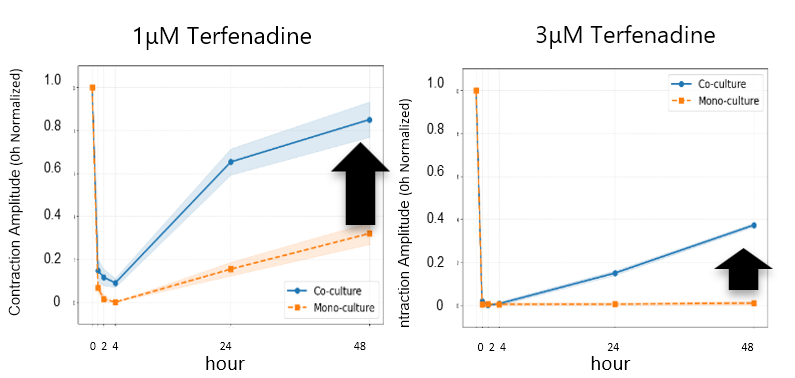
Terfenadine is a pharmaceutical compound known for its potential cardiotoxicity. However, it is primarily metabolized in the liver to fexofenadine, a non-toxic metabolite.
The graph illustrates the results when terfenadine was added at concentrations of 1 μM and 3 μM. In cardiomyocyte monoculture, beating contractility was suppressed and eventually ceased due to terfenadine toxicity. In contrast, contractility was maintained in the co-culture model. By utilizing integrated co-culture on the BioStellar™ Plate, we demonstrated a more accurate assessment of drug cardiotoxicity that accounts for hepatic metabolism.
Conclusions
By integrating the low-adsorption MyoFlex™ Plate with the pump-integrated BioStellar™ Plate, we established a physiologically relevant liver-hiPSC-EHT co-culture assay. The MyoFlex™ Plate enables precise contractile force evaluation while preventing non-specific drug loss via its PTF Pillars. Simultaneously, the BioStellar™ Plate reproduces inter-organ crosstalk under continuous fluidic perfusion. This combined platform successfully captured hepatic metabolism-dependent mitigation of terfenadine cardiotoxicity, overcoming the limitations of conventional monocultures and PDMS devices. Overall, this multi-organ MPS workflow offers enhanced translational predictability and serves as a powerful tool for early-stage drug safety and efficacy testing.
Reference
[1] K. Shinha, et al., Micromachines, 2021, 12(9), 1007.
[2] S. Horiuchi, et al., NAM Journal, 2026, 2, 100107.
[3] Y. Fujiwara, et al., Lab Chip, 2025, 25(15), 3682-3693.
Product information

* For any inquiries, quotes, or orders regarding the products, please feel free to contact us directly.
E-mail: s-bio_inquiry@ml.sumibe.co.jp