In recent years, organoid technology has made remarkable advancements in the field of regenerative medicine, drawing attention as an alternative method for organ transplantation and its applications in disease research. Stem cells from exfoliated deciduous teeth are one of the pluripotent stem cells gaining attention in regenerative medicine due to their ease of collection and excellent differentiation potential. They are expected to be applied in various medical fields and are considered a promising cell source for organoid formation.
This application note examined the recovery rate of deciduous tooth stem cells and, as a new endeavor, conducted spheroid formation experiments using centrifuge tubes to construct larger organoids that are closer to the biological state for transplantation purposes. Through this, we aim to present a novel approach to spheroid formation and contribute to further advancements in regenerative medicine and disease model research.
Data provided by: Professor Takayoshi Yamaza and Assistant Professor Soichiro Sonoda
Faculty of Dental Science, Department of Dental Science, Kyushu University
Comparison of Cell Recovery Rate
- Cells: Stem cells from exfoliated deciduous teeth (SHED)
- Tubes: STEMFULL™ centrifuge tube (15mL), ProteoSave™ centrifuge tube (50mL), Conventional centrifuge tubes (15mL and 50mL)
- Method:
1. SHED were suspended in αMEM containing 15% FBS (SHED medium) with the cell density of 1x10⁶ cells/mL.
2. 9mL of SHED medium was dispensed into each centrifuge tube, and 1mL of the above cell suspension was added to each tube and mixed.
3. The tubes were centrifuged for 5 minutes (2000 rpm, 4°C), and the supernatant was discarded.
4. The cells were resuspended in 1mL of SHED medium. The cell number in each tube was counted three times, and the average value was calculated. The recovery rate was calculated using the recovery rate of the conventional centrifuge tube as 100%, and the recovery rates were compared.
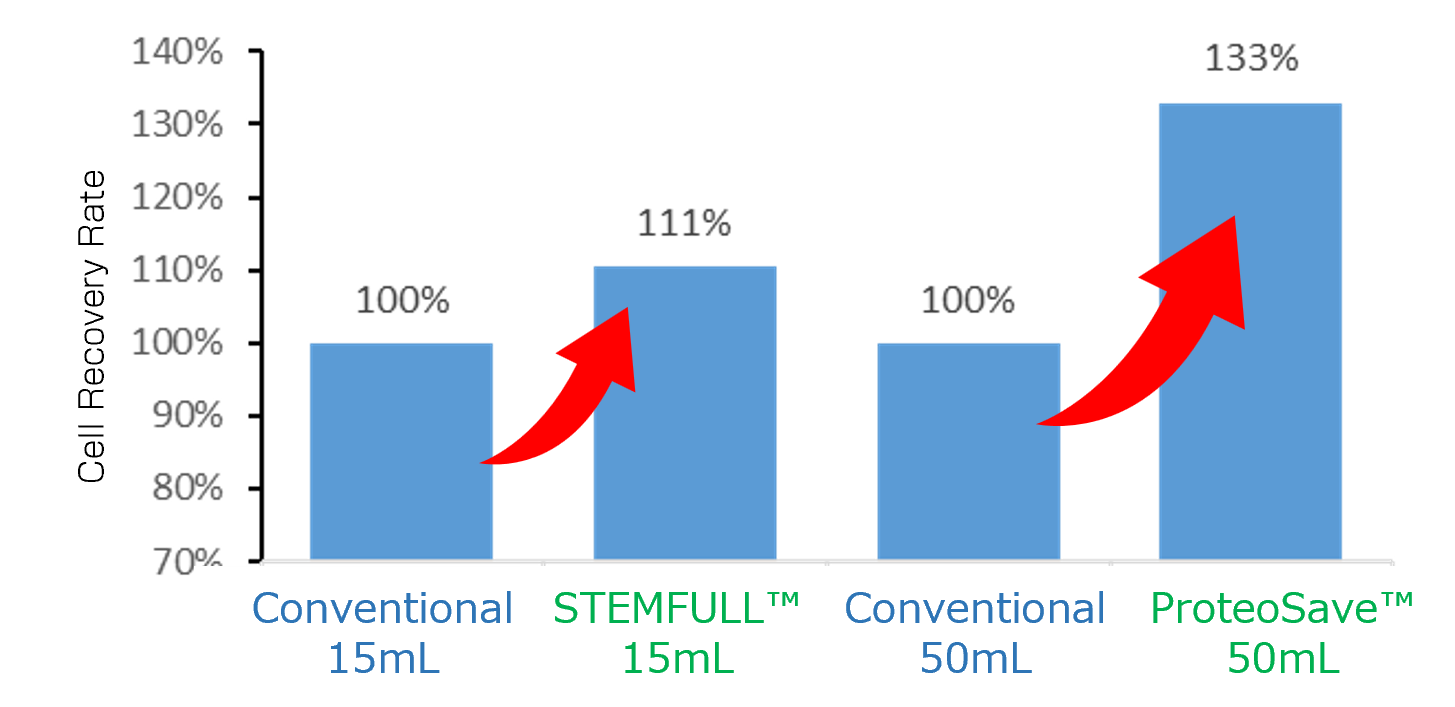
| STEMFULL™ and ProteoSave™ reduced cell adhesion to the centrifuge tubes and improved cell recovery rates compared to conventional tubes. |
|---|
Comparison of Spheroid Formation
- Cells: Stem cells from exfoliated deciduous teeth (SHED)
- Tubes: STEMFULL™ centrifuge tube (15mL), ProteoSave™ centrifuge tube (50mL), Conventional centrifuge tubes (15mL and 50mL)
- Method:
1. SHED were suspended in SHED medium (1x10⁶ cells/mL) and seeded at 3mL per centrifuge tube.
2. The tubes were incubated for one week at 37°C and 5% CO2 condition.
3. Spheroids in each centrifuge tube were observed (n=3).
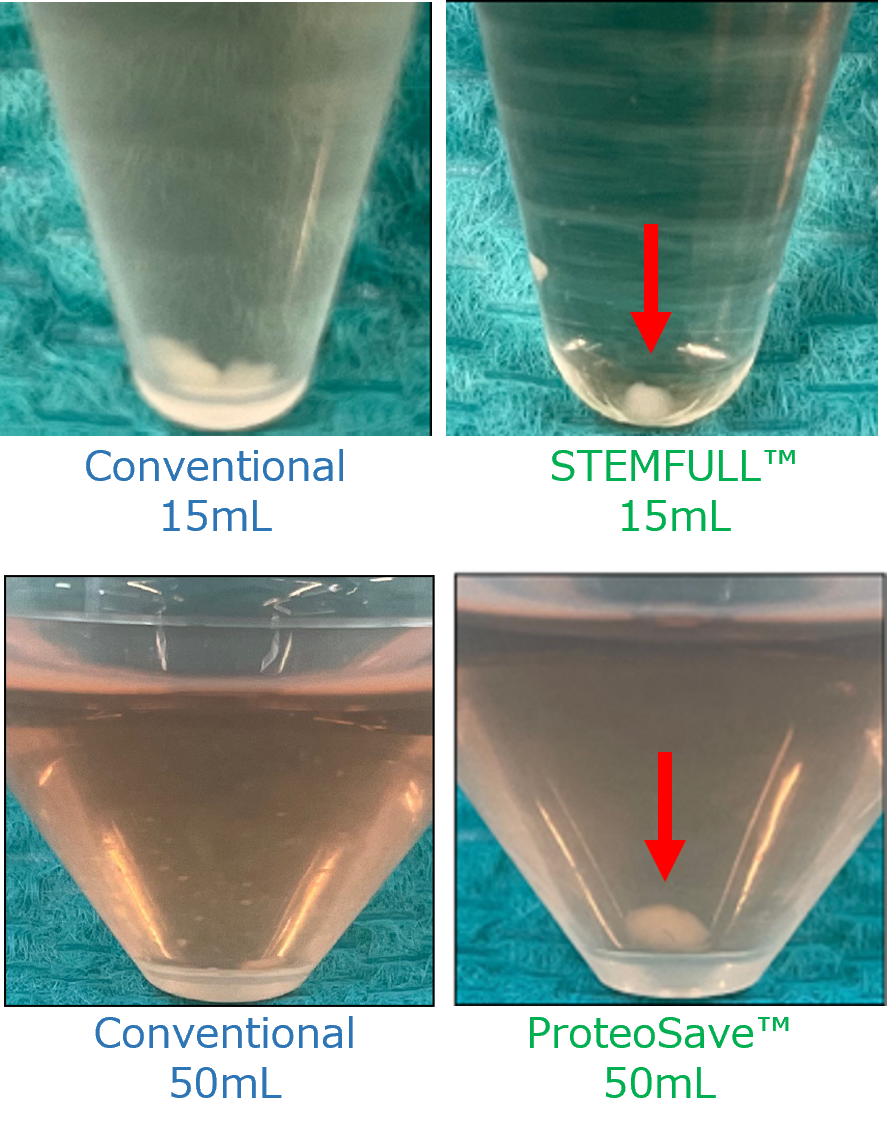
| Large spheroids observable by the naked eye were formed in STEMFULL™ and ProteoSave™, but not in conventional tubes. |
|---|