Data provided by Dr. Taylor Bertucci, Principal Investigator, The Neural Stem Cell Institute, USA
Introduction
Human pluripotent stem cell (hPSC)-derived cortical organoids serve as advanced models to study human brain development and neurological disorders. These organoids recapitulate key developmental processes such as neurogenesis and gliogenesis, allowing for long-term studies of cortical structure and function. However, traditional protocols often suffer from low production efficiency and high variability across hPSC lines, limiting reproducibility. This study presents an improved protocol using PrimeSurface™ 96 Slit-well Plate that increases production efficiency and consistency across multiple donor-derived cell lines. Efficiently detecting disease-relevant metabolic abnormalities, this approach advances mechanistic understanding of neurodegenerative diseases.
Method
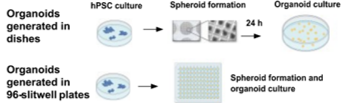
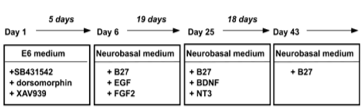
In this application note, cerebral cortical organoids were generated from hPSCs using 96 Slit-well Plate. Cells formed spheroids in the wells, followed by cultivation using specific patterning factors. In the control group, spheroids were formed in multi-dimple dishes, transferred to culture dishes after 24 hours, and cultured as organoids. Throughout the culture period, organoid morphology and size were regularly monitored, and immunostaining was performed to assess neuronal marker expression. The use of the 96 Slit-well Plate allowed for efficient and reproducible large-scale organoid production.
Results
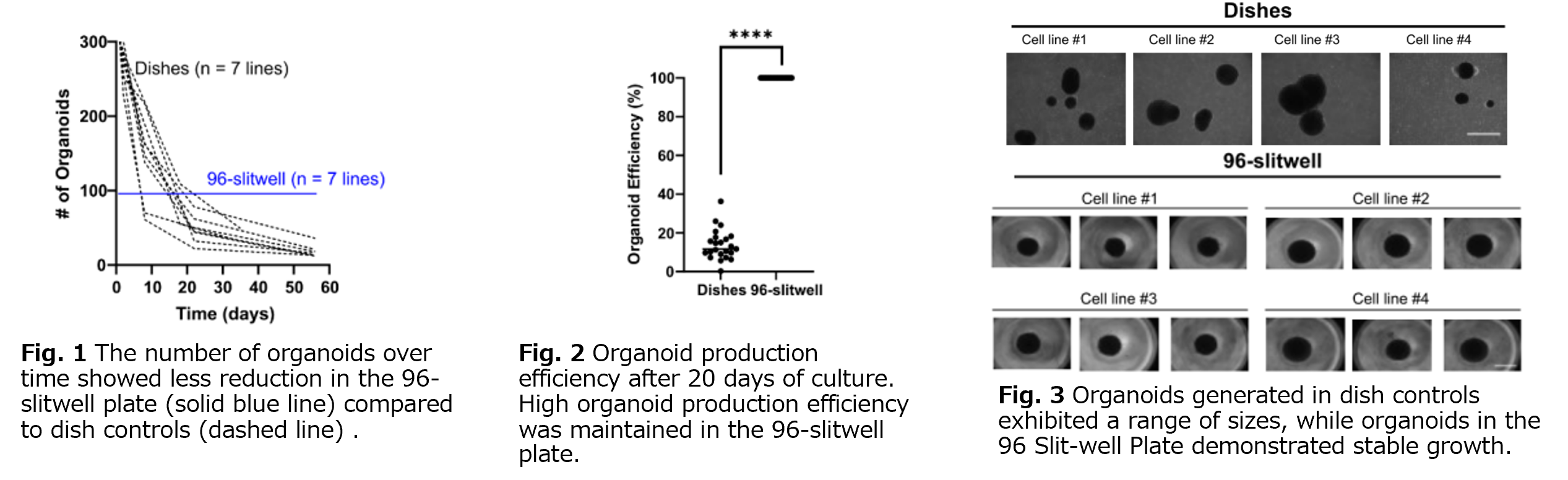
・Organoids cultured in the 96 Slit-well Plate exhibited fewer numerical losses, afforded higher survival rates, and yielded uniform size and stable growth.
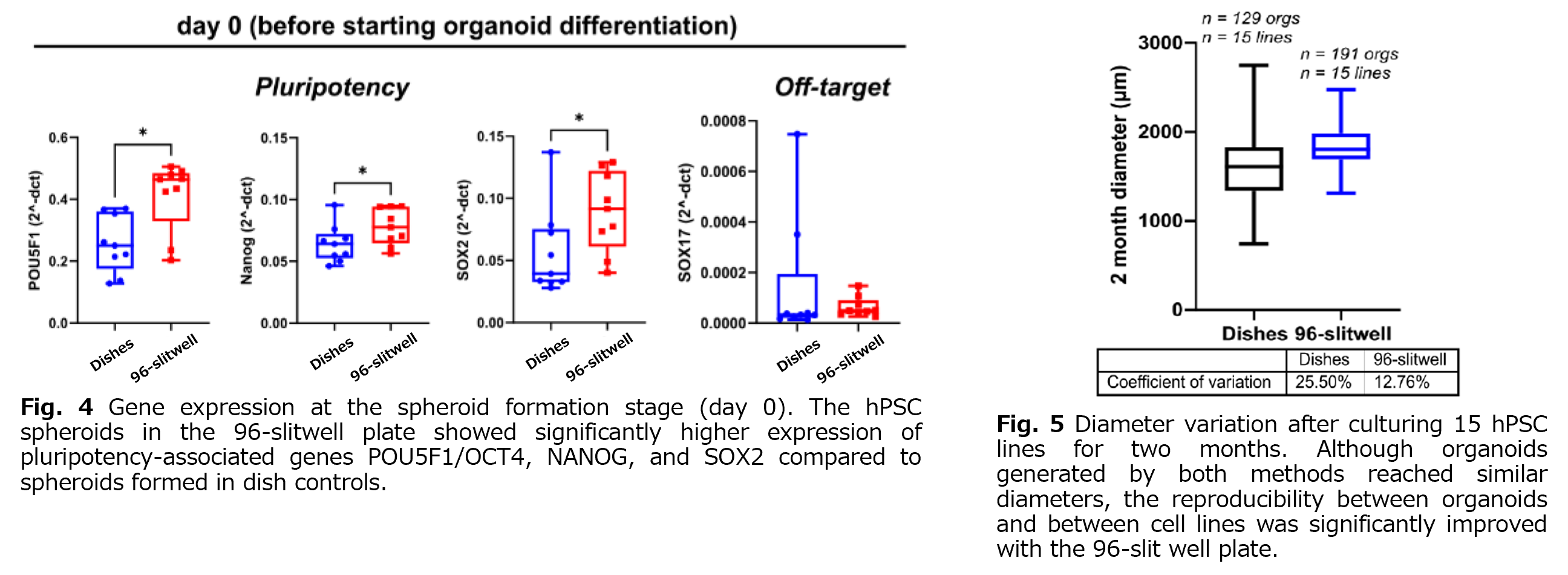
・At the time of spheroid formation, spheroids generated in the 96 Slit-well Plate showed significantly higher pluripotency-related gene expression compared to the control group and demonstrated a more uniform size distribution across multiple hPSC lines in comparison to the control group.
Discussion
Culturing with the 96 Slit-well Plate significantly improved organoid size uniformity and viability, resulting in more stable cultures compared to traditional methods. This reduced variability between cell lines and across experiments, enhancing reproducibility and reliability. The uniform formation of initial spheroids also played a critical role in supporting culture reproducibility.
| The 96 Slit-well Plate provides a uniform and stable culture environment, enabling large-scale and efficient organoid production. It reduces experimental variability and contributes to the standardization of organoid-based disease models. |
|---|