トップ画像

News from the S-BIO Business Division, Sumitomo Bakelite Co., Ltd.

XDemics' World’s First High Oxygen-Permeability & High-Density Cell Culture Technology “Expansify™” Enters the Japanese Market

画像1

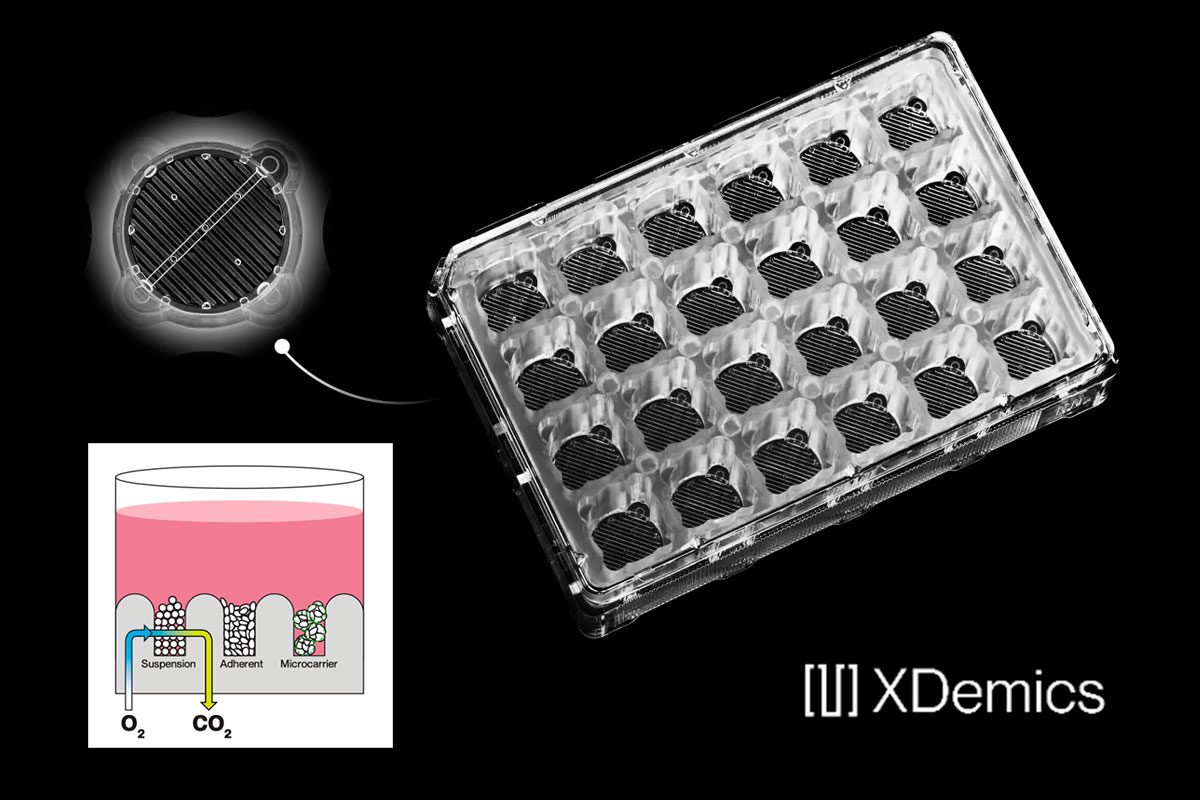
We are pleased to announce that we will begin introducing Expansify™, the world’s first* high oxygen-permeability, high-density cell culture vessel, from U.S.-based XDemics Corporation, to our customers in Japan starting October 2026.

Expansify™ is a high oxygen-permeability, high-density cell culture vessel featuring XDemics' proprietary High-Density Cell Respiration™ (HDCR™) technology. Its gas-permeable structure delivers oxygen directly to the cell environment, achieving high-density culture with minimized shear stress, with no agitation or sparging required.

Compared to conventional culture vessels, Expansify™ enables dramatically higher cell densities, while its ANSI/SLAS-compliant standard format ensures full compatibility with automation workflows. It also contributes to reduced risk during scale-up.

If you are interested in evaluating Expansify™, the world’s first* high oxygen-permeability, high-density cell culture vessel, please do not hesitate to contact us.

*Based on our research (September 2026).

.

Read More
What's new

Stay tuned for news about S-BIO

Application Introduction: A modular EHT platform with low drug adsorption and removable pillars enables multi-organ coupling and improves cardiotoxicity assessment

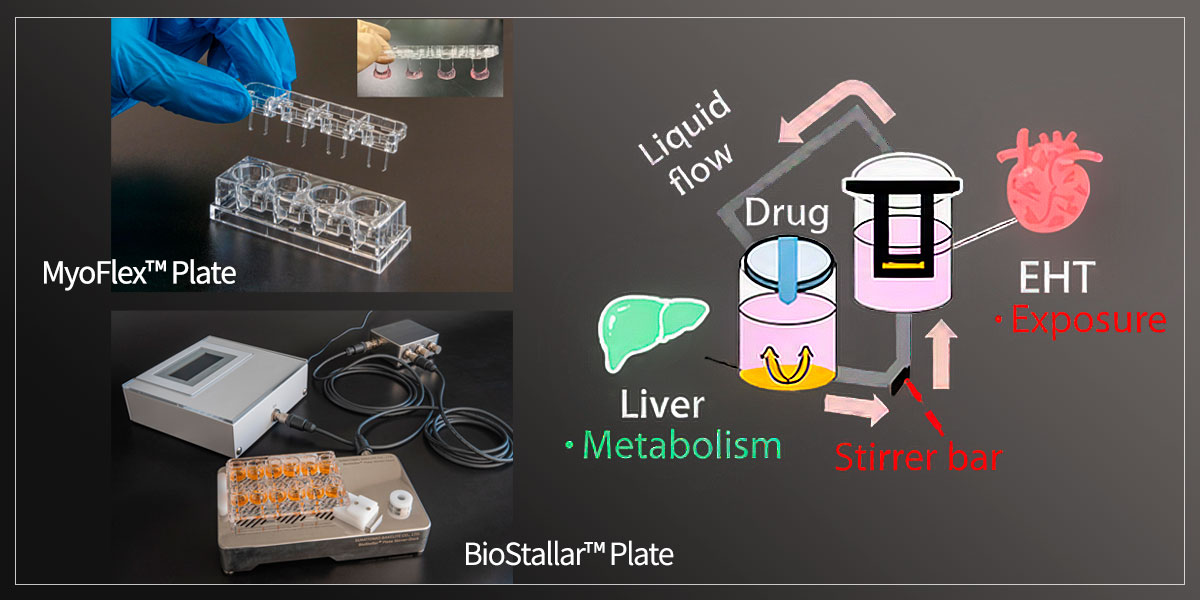
Combining the 3D Cardiac Tissue Contractility Measurement Device MyoFlex™ Plate and the On-Chip Pump-Type Multi-Organ MPS Device BioStellar™ Plate

画像2

We are pleased to introduce a cardiac toxicity assessment application combining our MyoFlex™ Plate for 3D cardiac tissue contraction measurement with our BioStellar™ Plate on-chip pump multi-organ MPS device. The MyoFlex™ Plate utilizes uniquely designed plastic film pillars that minimize non-specific drug adsorption, allowing for accurate evaluation of drug effects on 3D cardiac tissue. In this application, human 3D cardiac tissue constructed on the MyoFlex™ Plate was cultured long-term, and contraction function and heart rate were evaluated. We confirmed that the tissue could be stably maintained over 60 days. Furthermore, we established a co-culture system of hepatocytes and 3D cardiac tissue using the BioStellar™ Plate to evaluate cardiotoxicity, including hepatic metabolism. While a decrease in contractile function due to terfenadine was observed in the monoculture system of 3D cardiac tissue, contractile function was maintained in the co-culture system as terfenadine was converted into fexofenadine via hepatic metabolism. These results suggest that this evaluation system is highly useful for accurate cardiotoxicity assessment that reflects hepatic drug metabolism. If you are interested in this evaluation system, please feel free to contact us.

Read More

Exhibiting at the 15th Asian Community of Glycoscience & Glycotechnology Symposium (ACGG)

画像3

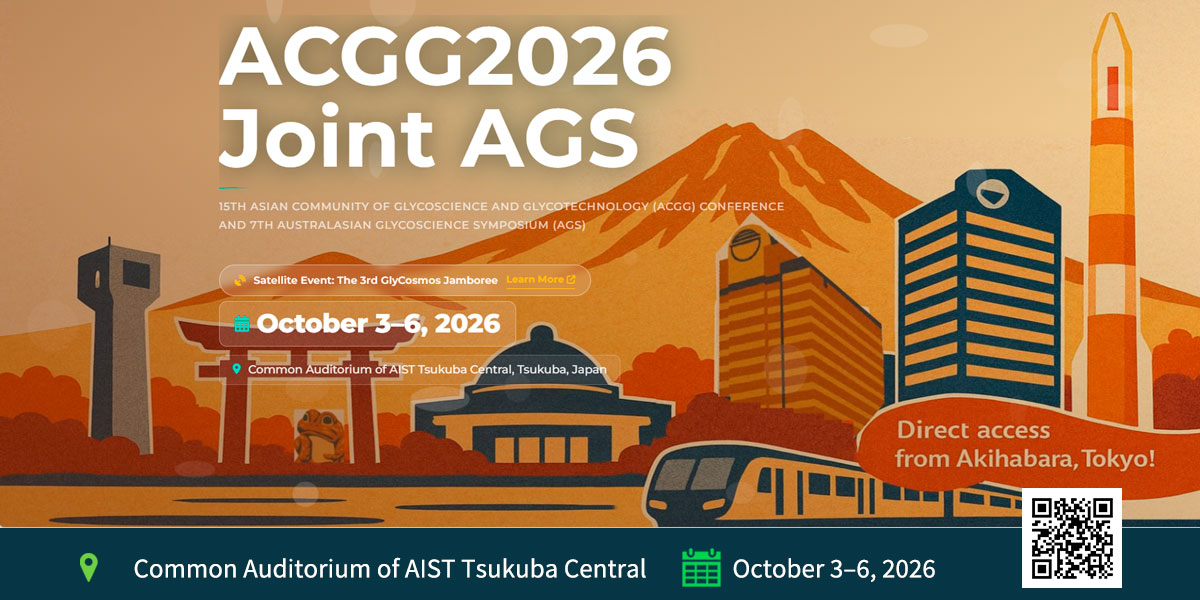
We will be exhibiting at the 15th Asian Community of Glycoscience & Glycotechnology Symposium (ACGG), to be held from Saturday, October 3 to Tuesday, October 6, 2026, at the National Institute of Advanced Industrial Science and Technology (AIST), Tsukuba, Ibaraki. This international symposium brings together glycoscience researchers from across Asia and Oceania and is held annually on a rotating basis among Asian countries. At our exhibition booth, we will showcase our products and deliver a short company presentation (approx. 5 minutes) featuring our latest technologies and product information. We warmly welcome all researchers involved in glycoscience to stop by our booth.

Read More

S-BIO Webinar Report: "RECENT ADVANCES IN ORGANOID PRODUCTION AND DRUG DISCOVERY"

We held the S-BIO Webinar "RECENT ADVANCES IN ORGANOID PRODUCTION AND DRUG DISCOVERY" on Thursday, September 10, 2026. Thanks to the cutting-edge insights and enthusiastic presentations on organoids by our guest speakers, the seminar was an extremely enriching event. As our first-ever global seminar, we were delighted to welcome a large number of participants from both Japan and abroad. For those who pre-registered but were unable to attend, we will notify you once the archive becomes available.

I’m Go Yamanouchi from the S-BIO Business Division. This summer has seen record-breaking heat, with maximum temperatures exceeding 40°C on what are being called "extreme heat days." I myself took my children to an indoor pool during the summer holidays, and the scorching heat reminded me once again of how valuable it is to have safe, comfortable indoor spaces. This intense heat affects not only humans, but also plants and microorganisms — though some living organisms have developed mechanisms to adapt to high-temperature environments. For example, when plants are exposed to heat stress, they produce proteins called "heat shock proteins" to prevent important cellular proteins from losing their function. Certain microorganisms known as "thermophiles" thrive in high-temperature environments such as hot springs and hydrothermal vents on the ocean floor. The enzymes produced by these organisms are heat-resistant and have found applications in a wide range of biotechnologies, including PCR. As humans, we too can learn from the ingenuity of these living organisms as we find ways to cope with the heat. As the lingering summer heat continues, please take good care of your health.

We also share information on social media.

X
LinkedIn

This email is sent to customers who exchanged business cards at exhibitions, participated in our campaigns, or made inquiries via our website etc. We use cookies, web beacons, and access logs on our website and in emails sent from us to analyze usage, conduct marketing and sales activities, and respond to inquiries.

Issued by: S-BIO Business Division, Sumitomo Bakelite Co., Ltd.

2-5-8 Higashi-Shinagawa, Shinagawa-ku, Tokyo, 140 0002, Japan
Inquiry about S-BIO: https://inquiry.sumibe.co.jp/m/e_s-BIO

Unsubscribe from this newsletter

https://www.sumibe.co.jp

Copyright2026 SUMITOMO BAKELITE CO., LTD. All Rights Reserved.